Let’s face it: most finance articles assume you already know what an index fund is or that you have three paychecks saved in the bank. But what if your current reality is that you open your bank app, covering your eyes with one hand so you don’t see the balance? And what if the money simply disappears from your account in the middle of the month in a magic act worthy of Las Vegas?
If you’re there, welcome. This is finance for real beginners. No boring jargon, no judging your daily coffees, and with an action plan you can start today.
The diagnosis: Stop playing hide and seek with your bank
The beginner’s first mistake is not spending too much; it’s not knowing what they are spending on. We live in the era of invisible payments: a tap with the phone here, an automatic subscription there, and suddenly the account is at a minimum.
To solve this, you don’t need an Excel template worthy of NASA. You just need to do a «damage tracking» for 30 days. Write down absolutely everything that comes out of your account, from rent to the gum at the kiosk. You can use a simple expense tracking app or a notebook on your nightstand. At the end of the month, you’ll be in for some incredible surprises about where your money really goes.
The strategy: The 50/30/20 rule (in the real world)
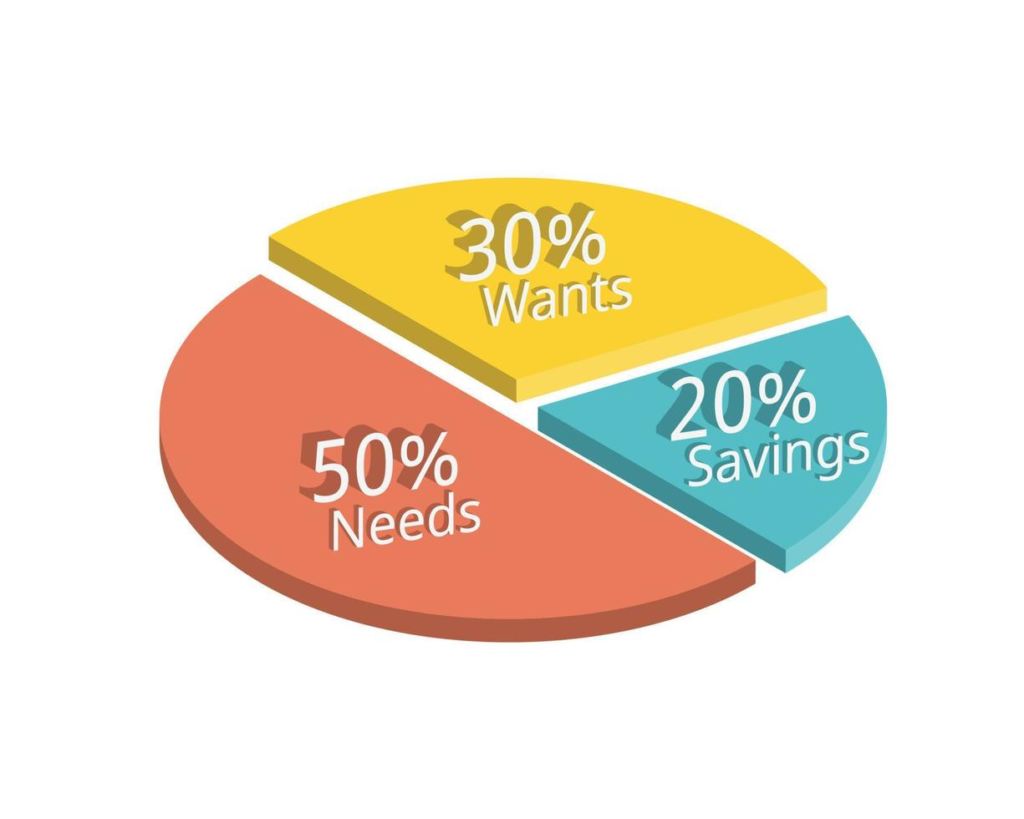
Once you know how much money you have and where it’s going, you need a system to organize it. Forget about ultra-strict budgets that prohibit you from going out with friends; they don’t work in the long run because they generate frustration. Instead, use the 50/30/20 rule, a visual and flexible method:
- 50% for your Needs: The essentials for survival. Rent or mortgage, electricity and water bills, grocery shopping, and transportation to work. If this percentage is much higher, your current lifestyle is suffocating you.
- 30% for your Wants: Yes, you read that right. A healthy financial budget requires allocating money for leisure. Going out, clothes you don’t urgently need, streaming platforms, and vacations. If you eliminate this, you’ll end up throwing your savings out the window by the third month.
- 20% for your «Future Self»: This money is untouchable. It is intended to build your cushion of tranquility or to pay off debts if you have any.
Your first goal: The Emergency Fund
If you are starting from scratch, your absolute priority is not to invest in the stock market, it is to build your safety net. In finance, this is called an Emergency Fund.
What is an emergency fund? It is a separate bank account (preferably at a different bank from your usual one to avoid temptation) where you accumulate money monthly until you have the equivalent of 3 to 6 months of your basic expenses.
Why is it vital? Because life happens. The car is going to break down, the dentist is going to call you, or you might go through a work slump. If you have this fund, an unexpected event is just an inconvenience that is paid for with money; if you don’t have it, an unexpected event becomes a credit card debt that will drag you down for months.
The master trick: Automate your peace of mind
The biggest enemy of your finances is not the global economy, it’s yourself and your willpower. If you wait until the end of the month to «see what’s left over» and save it, the answer will always be the same: zero. There will always be a dinner, a birthday, or a whim that takes up that space.
The secret of people who manage to save is that they pay themselves first. Set up an automatic transfer with your bank for the day after you get paid. If you decide to save €50 or €100 a month, make that money travel directly to your savings account without you having to intervene. If you don’t see it in your main account, your brain will adapt to living with the rest and saving will happen automatically.
Personal finance is a marathon, not a sprint. Don’t stress if you don’t meet the percentages perfectly in the first month; just taking control and knowing where every coin goes already puts you ahead of most of the population. Go for it!