
Knowing how to safely run a portable generator can be the difference between a manageable outage and a genuine emergency. Every year, preventable accidents happen because generators are placed too close to a home, wired incorrectly, or left running unattended overnight. Most of these incidents share a common cause: skipping one of a handful of basic safety steps.
This guide walks through exactly how to run a portable generator safely, from placement and ventilation to wiring and fuel handling, along with the mistakes that cause the most real-world accidents.
Quick Answer
Run a portable generator at least 20 feet from your home, never indoors or in a garage, connected through a proper transfer switch rather than a wall outlet, and always paired with a battery-powered carbon monoxide detector inside the house.
Carbon Monoxide: The Biggest Real Risk
Carbon monoxide poisoning is the most dangerous risk tied to portable generators, and it’s also the most preventable. Generators produce CO as a byproduct of combustion, and this gas is invisible, odorless, and deadly in enclosed or poorly ventilated spaces.
Never run a generator indoors, in a garage, or under a carport, even with doors and windows open. CO can build up quickly and drift into a home through windows, vents, or gaps around doors, even from units placed just a few feet away. As a result, distance and airflow both matter, not just one or the other.
Install battery-powered carbon monoxide detectors on every level of your home before an outage happens. This single step catches the vast majority of dangerous CO buildup before it becomes life-threatening. The Centers for Disease Control provides detailed carbon monoxide safety guidance that’s worth reviewing before your first outage.
Correct Placement
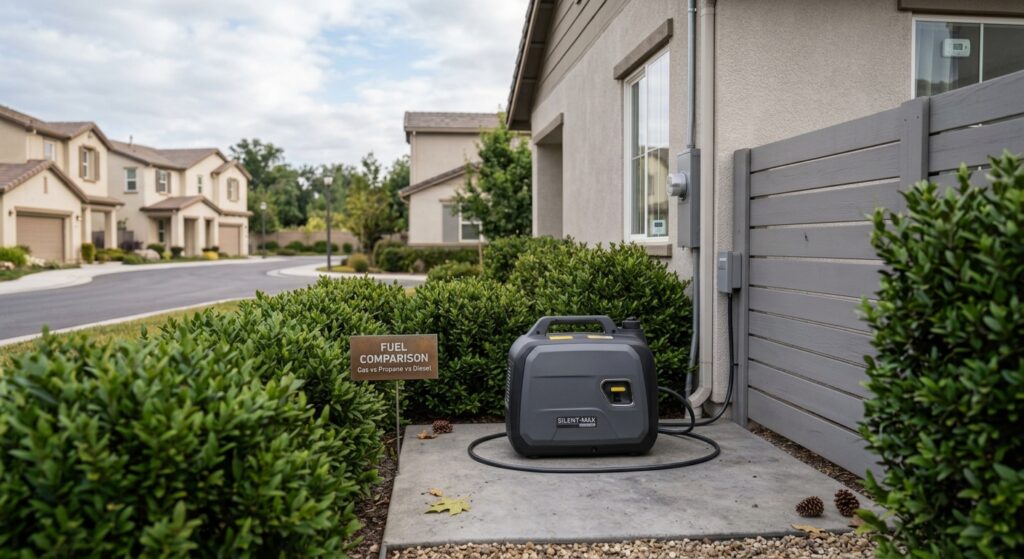
Place the generator at least 20 feet from your home, with the exhaust pointed away from windows, doors, and vents. Keep it on a dry, level surface, and protect it from rain using a generator tent or canopy rated for ventilation, never a tarp that traps exhaust.
Avoid placing a generator near shared walls with a neighbor’s home, since CO doesn’t respect property lines. If your lot is small, consider positioning the unit as far as practical from both your home and any adjacent structure.
Wiring It Correctly
Never plug a generator directly into a wall outlet. This practice, sometimes called backfeeding, sends electricity backward through your home’s wiring and out onto the utility grid. It can seriously injure or kill utility workers repairing lines nearby, and it’s illegal in most jurisdictions.
Instead, use a properly installed transfer switch, either manual or automatic, wired by a licensed electrician. A transfer switch isolates your home’s circuits from the grid while the generator runs, which protects both your household and utility crews. For appliances not on a transfer switch circuit, use heavy-duty, outdoor-rated extension cords instead.
Fuel Handling Best Practices
Store gasoline only in approved, labeled containers, and keep them away from the generator while it’s running or still hot. Never refuel a generator while it’s on, since spilled fuel can ignite on hot engine surfaces.
Let the unit cool for several minutes after shutting it down before adding more fuel. Additionally, store fuel containers away from living spaces and ignition sources, ideally in a detached shed or garage rather than inside the home itself.
Electrical and Weather Safety
Keep the generator dry at all times, and never touch it with wet hands or while standing in water. Use a ground fault circuit interrupter (GFCI) protected outlet or cord when running the unit in wet conditions.
If you must run a generator during rain or snow, use an approved generator tent designed specifically for ventilation and weather protection. Standard tarps trap both moisture and exhaust, creating two separate hazards at once.
A Simple Pre-Outage Safety Checklist
- Install CO detectors on every level of the home, and test them before storm season
- Confirm your transfer switch is installed and working, not just purchased
- Store fuel in approved containers, away from living spaces
- Identify a placement spot at least 20 feet from the home, with clear airflow
- Keep a GFCI-protected cord on hand for wet-weather use
3 Mistakes That Cause Most Generator Accidents
- Running a generator in a garage “just for a little while,” even with the door open. CO builds up faster than most people expect, and partial ventilation isn’t enough to prevent dangerous buildup.
- Backfeeding through a dryer outlet to avoid buying a transfer switch. This shortcut is both illegal in most areas and genuinely dangerous to utility workers, not just a technicality.
- Refueling a hot generator immediately after shutting it down. Waiting even 5–10 minutes for the engine to cool significantly reduces fire risk from spilled fuel.
Frequently Asked Questions
How far from the house should a portable generator be?
At least 20 feet, with the exhaust pointed away from windows, doors, and vents, and never in a garage or enclosed space.
Can I plug a generator into my dryer outlet?
No. This practice, called backfeeding, is illegal in most areas and can seriously injure utility workers repairing power lines nearby.
Do I need a carbon monoxide detector if I run my generator outside?
Yes. CO can still drift into a home from outdoor units, especially if they’re placed too close to windows or vents, so indoor detectors remain essential.
Is it safe to run a generator in the rain?
Only with an approved generator tent designed for ventilation and weather protection, never under a standard tarp, which traps both moisture and exhaust.
Bottom Line
Running a portable generator safely comes down to a short list of non-negotiable steps: proper distance and ventilation, a real transfer switch instead of backfeeding, careful fuel handling, and working carbon monoxide detectors throughout the home. Following these steps consistently turns a portable generator from a real hazard into a reliable, safe source of backup power.