
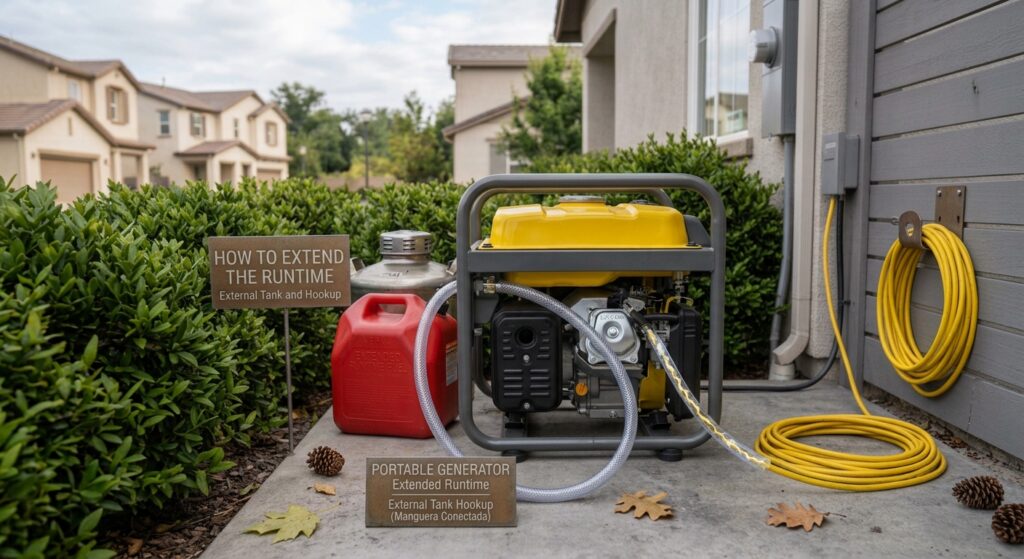
Learning how to extend the runtime of a portable generator can turn a unit that only lasts 8 hours per tank into one that comfortably covers an overnight outage without a 3 a.m. refueling trip. Most of the runtime gains come from a handful of practical adjustments, not from buying a bigger, more expensive machine.
This guide covers the load management, fuel, and equipment strategies that genuinely extend runtime, along with which upgrades are worth the investment and which aren’t.
Quick Answer
The most effective ways to extend a portable generator’s runtime are running it below 75% of rated load, switching to ECO mode when available, adding an external fuel tank, and turning off non-essential appliances during low-demand hours like overnight.
Reduce Load to Extend Runtime
Fuel consumption isn’t linear with load. A generator running at 50% capacity typically uses meaningfully less fuel per hour than one running at 90%, and the difference compounds over a multi-day outage. Turning off appliances you don’t need at any given moment, rather than running everything simultaneously around the clock, is the single highest-impact change most homeowners can make.
Practically, this means running a well pump or space heater only when actively needed, rather than leaving every possible appliance connected and drawing power continuously. Cycling non-essential loads on and off as needed, instead of running them constantly, meaningfully stretches each tank of fuel.
Use ECO Mode If Your Generator Has It
Many inverter and some conventional generators include an ECO mode, which automatically adjusts engine speed to match actual demand rather than running at a constant fixed speed. This can extend runtime by 20–40% during periods of light load, such as overnight when only a refrigerator and a few lights are drawing power.
ECO mode does have a trade-off: engine response to sudden load increases, like a refrigerator compressor kicking on, is slightly slower than at full constant speed, which can occasionally cause brief power dips with sensitive equipment. For most household use, this trade-off is well worth the fuel savings.
Add an External Fuel Tank
For extended outages, connecting an external fuel tank is one of the most effective runtime upgrades available. Many generators support an auxiliary fuel kit that gravity-feeds or pumps additional fuel into the main tank, extending runtime from a typical 8–12 hours to 24 hours or more without manual refueling.
External tank kits typically cost $50–$150 and are compatible with many popular generator models, though it’s worth confirming compatibility with your specific unit before purchasing, since not all generators support this modification safely.
Maintain the Engine Properly
A well-maintained generator runs more efficiently than a neglected one, which directly affects fuel consumption. Clean air filters, fresh oil, and a clean carburetor all contribute to more efficient combustion, while a dirty air filter alone can meaningfully reduce fuel efficiency by forcing the engine to work harder for the same output.
Running the generator periodically throughout the year, not just during outages, keeps these systems in good working order and avoids the efficiency losses that come from a generator sitting unused for months at a time.
Consider Parallel Capability for Flexible Runtime
If you own or are considering a parallel-capable inverter generator, running a single smaller unit for light loads (overnight, for example) and adding a second unit only when heavier appliances are needed extends effective runtime per gallon of fuel used, since each unit operates closer to its efficient load range rather than one larger generator running underutilized.
Runtime Extension Comparison
| Strategy | Typical runtime gain | Cost |
|---|---|---|
| Reducing load to 50–75% of capacity | 20–35% longer per tank | Free |
| Using ECO mode | 20–40% longer at light load | Free (if equipped) |
| External fuel tank | 2–3x longer between refuels | $50–$150 |
| Regular maintenance | 5–15% improved efficiency | $20–$50/year |
| Parallel unit setup | Better efficiency at variable loads | Cost of second unit |
What Doesn’t Meaningfully Extend Runtime
Buying a larger generator than needed doesn’t extend runtime on its own — in fact, running an oversized unit at very light load can be less fuel-efficient than a properly sized generator working closer to its ideal range. Similarly, premium fuel doesn’t provide a meaningful efficiency benefit for most small engines unless the manufacturer specifically recommends it, so it’s rarely worth the extra cost.
For guidance on getting the sizing right from the start, which affects runtime efficiency more than almost any other factor, see our guide on how to choose the right generator size.
3 Mistakes That Shorten Generator Runtime
- Running every appliance simultaneously instead of cycling non-essential loads. This keeps the generator near maximum capacity unnecessarily, burning fuel faster than needed.
- Skipping regular maintenance, then wondering why fuel consumption seems higher than the spec sheet suggests. A dirty air filter or old oil can measurably reduce efficiency over time.
- Adding an external fuel tank without confirming compatibility first. Improperly connected auxiliary tanks can create fuel delivery issues or safety hazards; always check manufacturer guidance before modifying the fuel system.
Frequently Asked Questions
Does ECO mode really save fuel?
Yes, typically 20–40% during light-load periods, since the engine adjusts speed to match actual demand instead of running at a constant fixed speed.
Is it safe to add an external fuel tank to a portable generator?
Yes, if using a kit designed for your specific model and following manufacturer installation guidance; improvised setups can create fuel leaks or safety hazards.
Does running a generator at lower load always save fuel?
Generally yes, up to a point — very light loads (under 25% of capacity) can actually reduce efficiency, so the ideal range is typically 50–75% of rated capacity.
How much does regular maintenance actually improve fuel efficiency?
Routine maintenance like air filter changes and fresh oil typically improves efficiency by 5–15%, which adds up meaningfully over a multi-day outage.
Bottom Line
Extending a portable generator’s runtime comes down to a few practical habits: managing load thoughtfully, using ECO mode when available, keeping the engine well maintained, and adding an external fuel tank for longer outages. None of these require buying a bigger, more expensive generator, and combined, they can meaningfully change how long a single tank of fuel actually lasts.