
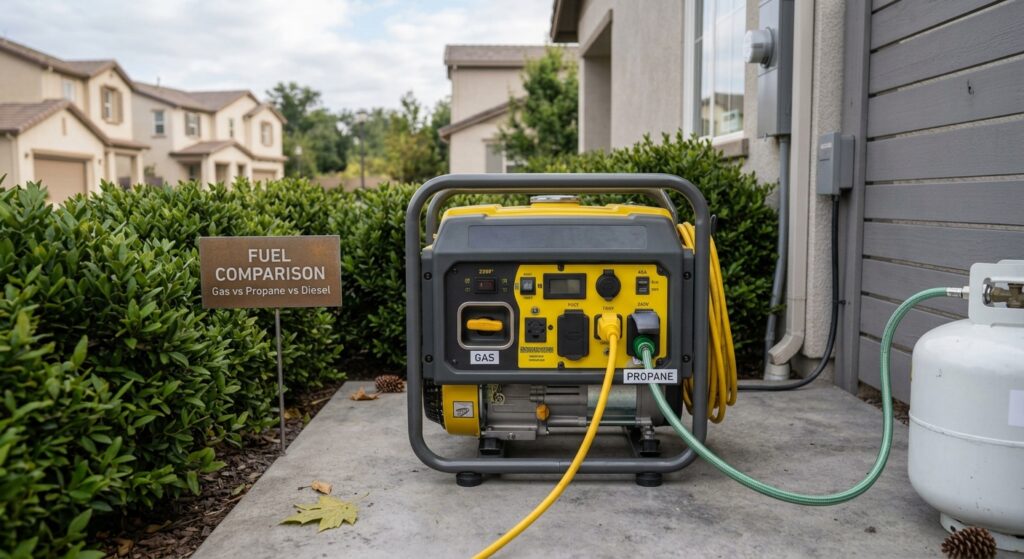
The best dual fuel generators solve a problem neither gasoline nor propane fully solves alone: the flexibility to run on whichever fuel is actually available when you need it. During widespread outages, gas stations frequently run dry within hours, while a propane tank sitting in your garage stays ready for years. A dual fuel generator lets you switch between the two without owning two separate machines.
This guide covers how dual fuel generators actually work, what you give up in efficiency for that flexibility, and which situations make the extra cost worth it.
Quick Answer
A dual fuel generator is worth the modest price premium (usually $100–$300 over a gas-only equivalent) for most homeowners, since it hedges against gasoline shortages during emergencies while still allowing cheaper gasoline use for everyday or non-emergency situations.
How Dual Fuel Generators Work
A dual fuel generator uses a carburetor engineered to accept either gasoline or propane, with a manual or electronic switch to change between them. Some models even allow switching fuel types while the generator is running, without needing to power down first.
The engine itself doesn’t change between fuels, only the fuel delivery system does, which is why dual fuel units are only slightly more expensive than single-fuel equivalents rather than dramatically pricier. Most reputable manufacturers rate their dual fuel engines for the same lifespan regardless of which fuel is used most often.
The Efficiency Trade-Off
Running a dual fuel generator on propane typically reduces output by around 10–15% compared to running the same unit on gasoline. A generator rated for 7,500 running watts on gasoline might only deliver 6,500–6,800 running watts on propane, which matters if you’re sizing the unit close to your actual power needs.
This isn’t a defect specific to dual fuel models. It’s simply a characteristic of how propane burns compared to gasoline, and it applies to any generator running on propane, dual fuel or not. The practical takeaway: when sizing a dual fuel generator, plan around its propane output rather than its higher gasoline-rated wattage, so you’re not caught short during an outage.
Dual Fuel vs Single Fuel: Comparison Table
| Factor | Dual Fuel Generator | Gasoline-Only | Propane-Only |
|---|---|---|---|
| Price premium | $100–$300 over gas-only | Baseline | Similar to dual fuel |
| Fuel flexibility | Both, switchable | Gasoline only | Propane only |
| Output on propane | 10–15% lower than gas rating | N/A | Rated for propane directly |
| Storage flexibility | High (choose based on availability) | Low (30–60 day shelf life) | High (indefinite) |
| Emergency reliability | Best of both | Vulnerable to shortages | Excellent, if tank is full |
Who Benefits Most From a Dual Fuel Generator
Homeowners in hurricane or severe-storm-prone regions benefit most, since gasoline shortages during regional emergencies are common, and having a propane backup means the generator keeps running even when local gas stations are empty or have hours-long lines.
Households that already own a propane tank, whether for a grill, patio heater, or standby generator, get dual fuel flexibility at minimal added cost, since the fuel source is already on hand.
Buyers who want a generator that sits unused for long stretches benefit from the ability to default to propane, since it doesn’t degrade the way stored gasoline does between uses.
By contrast, buyers who use their generator frequently and always have fresh gasoline on hand may not see enough benefit to justify the price premium, particularly if maximum output on a single fuel matters more than flexibility.
What to Check Before Buying
Rated wattage on both fuels, not just the gasoline figure, since manufacturers sometimes advertise only the higher gasoline-rated number prominently.
Tank size for each fuel type, since dual fuel units typically pair a standard gasoline tank with a separate propane hose connection rather than a built-in propane tank, meaning you’ll need your own propane cylinders.
Runtime at 50% load on propane specifically, which is usually shorter than the advertised gasoline runtime and matters for planning fuel needs during an extended outage.
For more on how much wattage you actually need before comparing dual fuel models, see our guide on how to choose the right generator size. If you’re still deciding between fuel types generally, our full breakdown of gas vs propane vs diesel generators covers the trade-offs in more depth.
3 Mistakes Buyers Make With Dual Fuel Generators
- Sizing the generator based on its gasoline-rated wattage, then relying on propane during an actual outage. This can leave 10–15% less power than expected exactly when it matters most.
- Assuming dual fuel means “better” without checking the price difference actually delivers value for their situation. Frequent users with reliable gasoline access may not need the flexibility enough to justify the premium.
- Not keeping a propane tank filled and on hand. A dual fuel generator only helps during a gasoline shortage if you already have propane ready to go before the emergency starts.
Frequently Asked Questions
Is a dual fuel generator worth the extra cost?
For most homeowners in storm-prone areas or those wanting flexibility during emergencies, yes, the $100–$300 premium is a reasonable trade for the added reliability.
Do dual fuel generators lose power on propane?
Yes, typically 10–15% less output on propane compared to gasoline, which is worth accounting for when sizing the unit for your needs.
Can I switch fuels while the generator is running?
Many modern dual fuel models allow this, though it’s worth confirming with the specific manufacturer, since not every model supports a live switch.
Do I need special propane tanks for a dual fuel generator?
Standard propane cylinders, the same type used for grills, typically work with most dual fuel generators, though larger tanks may require an adapter hose.
Bottom Line
The best dual fuel generators offer genuine peace of mind for a modest price premium, particularly for homeowners in areas prone to widespread outages where gasoline can become scarce. Just remember to size the unit around its propane output, not its higher gasoline rating, so you’re not left short on power exactly when flexibility matters most.