
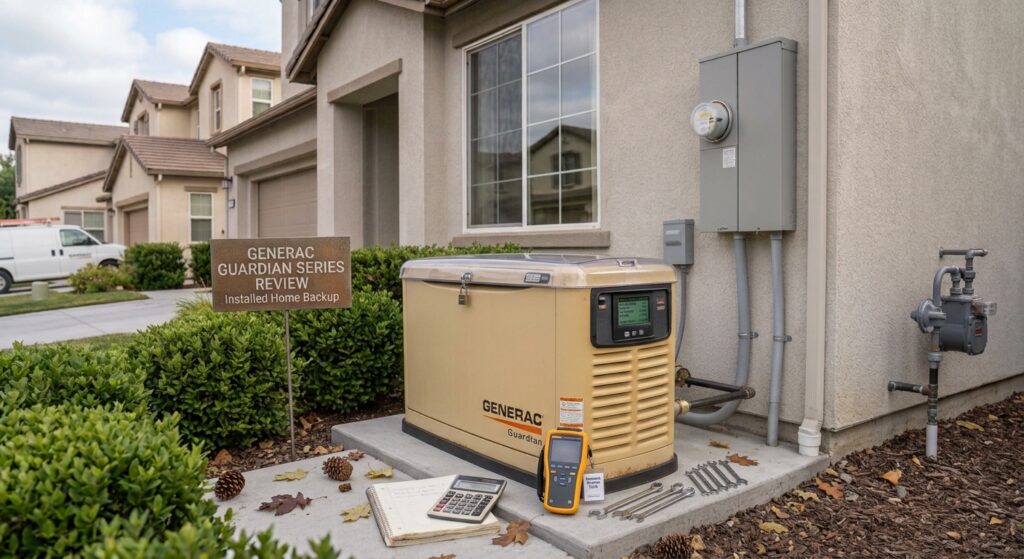
Knowing how long standby generators last helps put the upfront installation cost into proper perspective, since a $10,000 system spread across its realistic lifespan often works out to a modest annual cost once you factor in years of reliable service. Lifespan varies more than most buyers expect, though, depending heavily on maintenance, usage patterns, and a few specific components that tend to wear out before the rest of the unit.
This guide covers realistic lifespan expectations, which components typically fail first, and what actually shortens or extends a standby generator’s useful life.
Quick Answer
With proper maintenance, most standby generators last 15–20 years, or roughly 1,500–3,000 hours of actual running time, though engine components can sometimes be rebuilt or replaced to extend total service life beyond that range.
Lifespan by Usage Pattern
| Usage pattern | Typical lifespan | Notes |
|---|---|---|
| Occasional outages only (weekly self-test + a few outages/year) | 18–25 years | Most common pattern; low actual running hours |
| Frequent outages (storm-prone region, multiple uses/year) | 12–18 years | More running hours accelerate wear |
| Extended/continuous use (extended power instability) | 8–15 years | Significantly more running hours than typical residential use |
Most homeowners fall into the first category, since a standby generator’s weekly self-test only runs for a few minutes and adds minimal wear compared to actual extended outage use.
What Actually Wears Out First
The battery is typically the first component to need replacement, usually every 2–4 years, since it’s responsible for starting the engine and is subject to constant trickle-charging between uses.
Spark plugs and air filters need periodic replacement as routine maintenance items, generally every 1–2 years depending on usage, and neglecting these can accelerate wear on other engine components.
The engine itself, assuming regular oil changes and filter maintenance, is typically the longest-lasting major component, often outlasting several rounds of smaller part replacements before requiring a major rebuild or the unit’s eventual replacement.
The automatic transfer switch, a largely mechanical and electronic component, generally has a long service life with minimal maintenance needs, though it should be inspected during annual service visits.
How Maintenance Affects Total Lifespan
Generators that receive annual professional maintenance, including oil changes, filter replacement, and a full inspection, consistently outlast those that only rely on the automatic self-test without additional service. Skipping annual maintenance doesn’t necessarily cause immediate failure, but it accelerates wear on components that a technician would otherwise catch and address before they become larger problems.
Most manufacturer warranties, including Generac’s, actually require documented annual maintenance to remain valid, which means skipping this step can void warranty coverage even if the generator continues running without issue for years afterward.
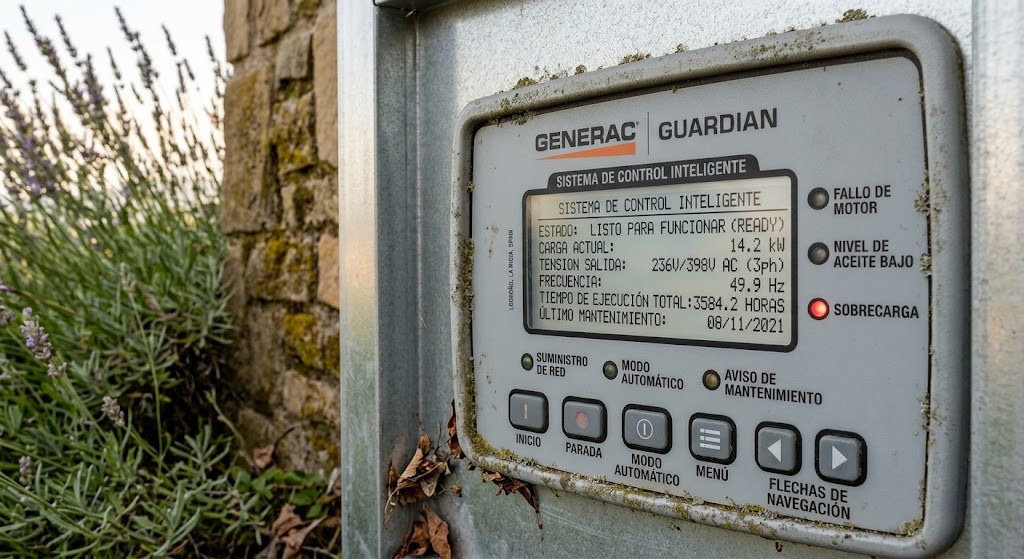
Signs a Standby Generator Is Nearing End of Life
Increasingly frequent repairs, particularly if the same component fails multiple times despite proper maintenance, often signal that overall wear is outpacing what routine service can address.
Declining performance during self-tests, such as longer-than-normal startup times or unusual noises, can indicate developing engine issues before a complete failure occurs.
Rising fuel consumption for the same load sometimes points to declining engine efficiency, which becomes more common as components age even with good maintenance.
Parts becoming harder to source, particularly for older or discontinued models, can eventually make repairs more expensive or slower than replacing the unit entirely.
Can a Standby Generator Be Rebuilt Instead of Replaced?
For many models, yes. A major engine rebuild, replacing pistons, rings, and other core components, can extend a generator’s service life by another 8–12 years at a fraction of full replacement cost, though this option depends on parts availability for the specific model and brand. This is more commonly viable with widely sold brands like Generac, where parts remain available for many years after a given model is discontinued, compared to smaller or less common brands.
For more on choosing a brand with strong long-term parts and service support from the start, see our comparison of Generac vs Champion vs Briggs & Stratton.
Does Brand Affect Lifespan?
Brand affects lifespan indirectly, mainly through parts availability and service network quality rather than dramatic differences in core engine durability between major manufacturers. A well-maintained unit from any of the major brands (Generac, Champion, Briggs & Stratton, Kohler) can reasonably be expected to reach the 15–20 year range, while a neglected unit from even the most reputable brand will likely fall short of that.
3 Mistakes That Shorten Standby Generator Lifespan
- Skipping the annual professional maintenance visit to save the yearly cost. This often voids warranty coverage and accelerates wear that regular service would have caught early.
- Ignoring battery replacement until the generator fails to start during an actual outage. Proactively replacing the battery every 2–4 years avoids this common and preventable failure point.
- Assuming the weekly self-test alone is sufficient maintenance. The self-test confirms the unit starts, but doesn’t replace oil, filters, or catch developing mechanical issues the way a full inspection does.
Frequently Asked Questions
How many years does a standby generator typically last?
Most well-maintained standby generators last 15–20 years, with some reaching 25 years under light usage patterns and consistent professional maintenance.
What is the first part to fail on a standby generator?
The battery is typically the first component needing replacement, usually every 2–4 years, since it’s responsible for starting the engine and is under constant light electrical load.
Does skipping maintenance void the warranty?
Yes, for most major brands including Generac, documented annual maintenance is required to keep the warranty valid, even if the unit appears to be running fine without it.
Can an old standby generator be rebuilt instead of replaced?
Often yes, particularly for widely sold brands with good long-term parts availability, extending service life by another 8–12 years at a fraction of full replacement cost.
Bottom Line
A well-maintained standby generator realistically lasts 15–20 years, with battery replacement and annual professional service playing the biggest role in reaching or exceeding that range. Understanding which components wear out first, and staying ahead of routine maintenance, is the most reliable way to get the full expected lifespan out of a significant home investment.