
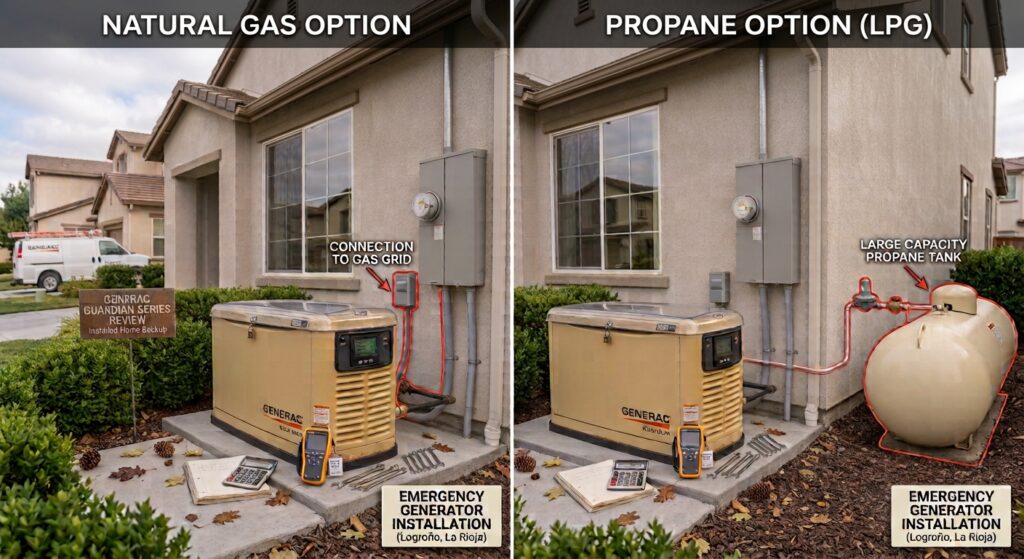
Choosing between a natural gas vs propane standby generator is one of the most consequential decisions in a whole-house installation, since it affects output, running cost, and how reliable your generator will be during the exact kind of widespread emergency it’s meant for. Both fuels power the same generator models, but they behave differently enough that the choice deserves real consideration rather than defaulting to whichever line happens to already reach your property.
This guide compares natural gas and propane standby generators on output, cost, runtime, and reliability, so you can decide which fuel fits your situation before installation begins.
Quick Answer
In the natural gas vs propane standby generator comparison, natural gas wins on unlimited runtime and lower ongoing fuel cost, since it draws directly from the utility line with no tank to refill. Propane wins on independence from utility gas supply and slightly higher power output per unit of fuel, at the cost of needing a large on-site tank.
How Natural Gas Standby Generators Work
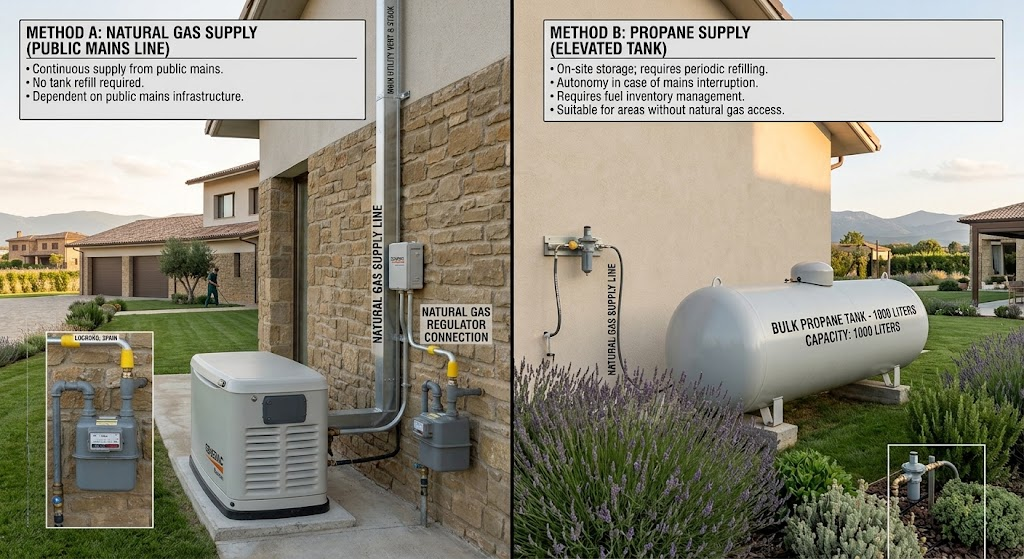
A natural gas standby generator connects directly to your home’s existing gas utility line, drawing fuel continuously with no on-site storage tank required. This means genuinely unlimited runtime, as long as the utility gas supply itself remains active, which is the case during the vast majority of power outages that don’t also involve widespread infrastructure damage.
- Runtime: Effectively unlimited, tied to utility gas supply
- Installation cost: Lower if an adequate line already exists; higher if the line needs upsizing
- Ongoing fuel cost: Lower per kWh than propane in most regions
- Output: Slightly lower than the same generator running on propane
How Propane Standby Generators Work
A propane standby generator draws from a large on-site tank, typically 250–1,000 gallons, buried or placed above ground on the property. Since the fuel supply is self-contained, propane offers genuine independence from the utility gas network, an advantage during severe regional events where gas utility service itself might be disrupted alongside electricity.
- Runtime: Limited by tank size, but a large tank can support days or weeks of intermittent use
- Installation cost: Higher, due to tank purchase or lease and additional site work
- Ongoing fuel cost: Higher per kWh than natural gas in most regions
- Output: Slightly higher than the same generator running on natural gas
Natural Gas vs Propane Standby Generator: Full Comparison
| Factor | Natural Gas | Propane |
|---|---|---|
| Runtime | Unlimited (utility-dependent) | Limited by tank size |
| Fuel cost per kWh | Lower | Higher |
| Installation cost | Lower (if line exists) | Higher (tank required) |
| Power output | Slightly lower | Slightly higher (~5-10%) |
| Independence from utility | No | Yes |
| Best for | Most homeowners with existing gas service | Rural properties, disaster-prone regions |
Why Output Differs Between the Two Fuels
Propane has a higher energy density than natural gas per unit of volume delivered to the engine, which is why the same generator model typically produces about 5–10% more output on propane than on natural gas. This difference is usually built into manufacturer spec sheets, which often list two separate kW ratings for the same unit depending on fuel type — worth checking carefully when sizing a generator, since assuming the higher propane-rated output while planning to install on natural gas can leave you short of expected capacity.
Cost Comparison Over Time
While propane typically costs more per unit of energy delivered, the real cost difference depends heavily on how often the generator actually runs. For occasional use, limited mostly to the weekly self-test and a few short outages per year, the fuel cost difference between natural gas and propane is often modest in absolute dollar terms. For homes with frequent, extended outages, the gap becomes more significant, since propane’s higher per-kWh cost compounds across more running hours.
Installation cost tells a different story: a propane standby generator requires purchasing or leasing a tank and additional site work, which can add $1,500–$3,000 to the upfront installation cost compared to a natural gas setup with an existing adequate line.
When Utility Gas Reliability Becomes the Deciding Factor
The single biggest argument for propane over natural gas isn’t fuel cost — it’s independence from the utility gas network itself. In the rare but real scenario of a severe regional disaster affecting both electricity and gas utility service simultaneously, a natural gas generator becomes useless, while a propane system with a full tank continues operating normally. For homeowners in regions prone to major hurricanes or other severe weather events, this consideration alone sometimes outweighs the cost advantages of natural gas. The U.S. Department of Energy’s emergency preparedness guidance discusses utility resilience planning in more general terms worth reviewing before deciding.
Which Fuel Fits Your Situation?
Choose natural gas if: your property already has an adequate gas line, you want the lowest ongoing fuel cost, and you’re comfortable with the small risk of utility gas disruption during the most extreme regional emergencies.
Choose propane if: no natural gas line is available at your property, you live in a region prone to severe multi-utility disruptions, or you specifically want fuel independence regardless of what happens to local utility infrastructure.
For help determining what generator capacity you’ll need regardless of fuel choice, see our guide on best whole-house generators by home size, and for a full cost breakdown including installation, see our guide on whole-house generator cost installed.
3 Mistakes Homeowners Make Choosing Between the Two
- Sizing the generator based on its propane-rated output while planning to install on natural gas. This can leave 5-10% less capacity than expected, which matters if the system is sized close to actual home load.
- Choosing propane purely for fuel independence without checking installation cost first. The tank and site work premium is significant enough that it’s worth confirming the added resilience genuinely matters for your specific risk profile.
- Assuming natural gas supply is always guaranteed during outages. While generally reliable, utility gas service can occasionally be affected during the most severe regional disasters, which is worth weighing against propane’s added upfront cost.
Frequently Asked Questions
Is propane or natural gas better for a standby generator?
Natural gas offers unlimited runtime and lower ongoing cost for most homeowners with an existing gas line, while propane offers fuel independence and slightly higher output, better suited to rural properties or disaster-prone regions.
Does a propane generator produce more power than natural gas?
Yes, typically 5-10% more output from the same generator model, due to propane’s higher energy density per unit of fuel delivered to the engine.
How big of a propane tank do I need for a standby generator?
Most residential installations use a 250–500 gallon tank, though larger properties or those wanting extended independence from refueling sometimes install 1,000 gallon tanks.
Can I switch a standby generator from natural gas to propane later?
Many models support this with a fuel conversion kit, though it’s worth confirming compatibility with your specific generator model and consulting a licensed installer before attempting the switch.
Bottom Line
The natural gas vs propane standby generator decision comes down to whether unlimited runtime and lower ongoing cost matter more to you than genuine independence from the utility gas network. Most homeowners with an existing gas line do well with natural gas, while those in disaster-prone regions or without gas service available often find propane’s added resilience worth the higher installation and fuel cost.