
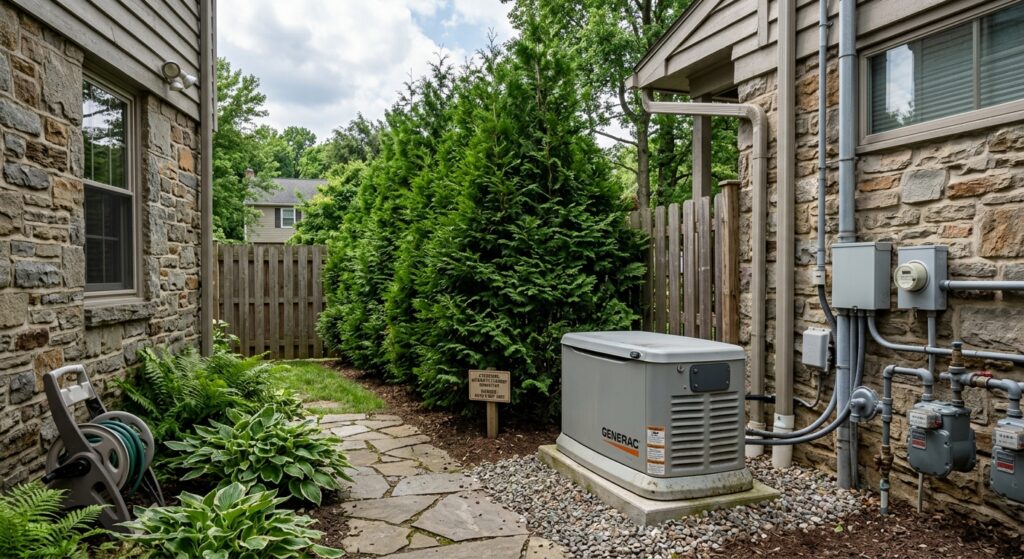
Whole house generator noise is one of the most common concerns homeowners raise before buying a standby unit. Nobody wants a machine running in the yard that disrupts conversations or upsets the neighbors. Fortunately, most modern standby generators are quieter than people expect. The noise level is easy to understand once you know what to compare it against.
How Loud Is a Whole House Generator, in Real Numbers?
Most residential standby generators operate between 60 and 70 decibels when measured from about 23 feet away, which is the industry-standard testing distance. For context, that range sits close to normal conversation, which typically measures around 60 decibels. Therefore, a running generator is noticeable, but it is far from the disruptive roar many homeowners imagine before buying one.
Comparing Generator Noise to Everyday Sounds
Numbers alone can be hard to picture, so a few comparisons help. A quiet refrigerator hums at around 40 decibels, while normal conversation sits near 60. A vacuum cleaner typically reaches 70 decibels, and a gas-powered lawn mower can hit 80 to 90 decibels. Most whole house generators fall in the 60 to 70 decibel range. As a result, they land somewhere between a conversation and a vacuum cleaner, running continuously rather than in short bursts.
What Affects How Loud Your Generator Feels
Several factors shape how noticeable whole house generator noise actually is in daily life. First, distance matters enormously, since sound drops off quickly the farther you get from the source. Second, the generator’s placement relative to your windows and outdoor living spaces changes how much noise reaches the house. Third, hard surfaces like fences, patios, or nearby walls can reflect sound and make it feel louder than the rated decibel level suggests. Finally, the specific model matters, since manufacturers use different engine designs and enclosures that affect the actual sound output.
Comparing Noise Levels Across Brands
Generac’s Guardian series is one of the most popular residential lines. It typically runs around 65 to 67 decibels at the standard test distance. Kohler’s residential standby units land in a similar range, often between 63 and 68 decibels depending on the model size. Cummins and Briggs & Stratton units fall comparably close, since most manufacturers design around similar noise regulations and customer expectations. As a result, brand alone rarely makes a dramatic difference. Instead, placement and installation choices matter more than which manufacturer you choose.
How to Reduce Whole House Generator Noise
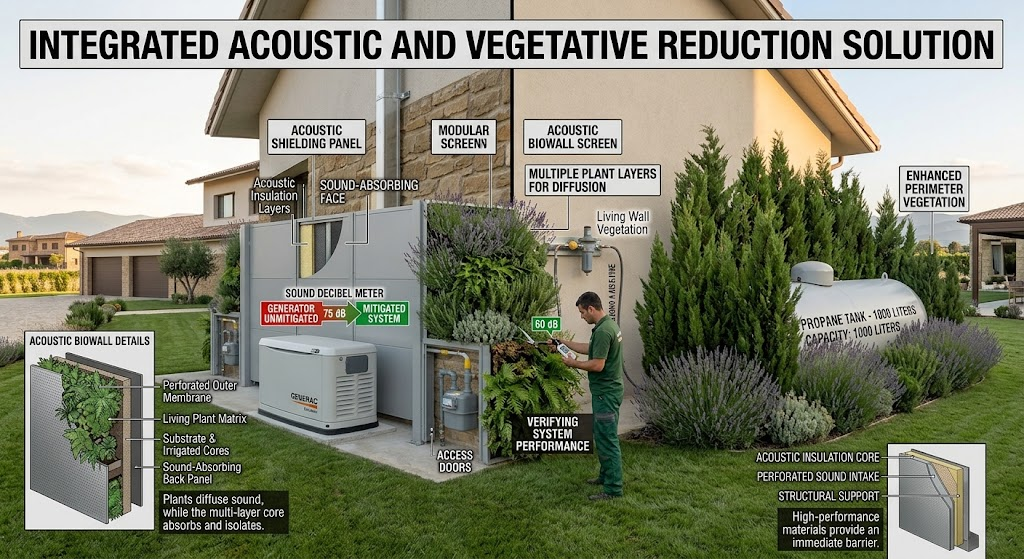
If noise is a concern, several practical steps can help. First, place the generator as far from bedroom windows and outdoor living areas as your property and local codes allow. Second, consider a sound-dampening enclosure, which can meaningfully reduce perceived noise without affecting performance. Third, position the generator’s exhaust away from your house and any neighboring homes, since exhaust direction affects how noise travels. In addition, some homeowners plant dense shrubs or install a small fence between the generator and outdoor seating areas. Both can help absorb and deflect sound.
HOA Rules and Local Noise Ordinances
Before installing a generator, check both HOA rules and local noise ordinances. Some communities regulate placement, screening, or even permitted run times. Many HOAs require generators to be visually screened from the street or from neighboring yards, which often overlaps with noise-reduction placement anyway. Therefore, addressing both requirements together during installation planning saves time and potential conflict later.
Weekly Self-Tests and Neighbor Considerations
Most standby generators run a brief self-test weekly, typically for 10 to 20 minutes. This confirms the system still works correctly. Because this happens on a set schedule, choose a time that avoids early mornings or late evenings. Neighbors are more likely to be bothered during those hours. In addition, letting close neighbors know about the schedule in advance is a simple courtesy that can prevent misunderstandings, especially in tighter suburban neighborhoods.
Sizing and Noise: Is a Bigger Generator Louder?
It is a common assumption that a larger generator automatically means more noise, but the relationship is not that simple. A larger unit does have a bigger engine, which can add some sound. However, manufacturers often compensate with better enclosures and mufflers on their higher-capacity models, since larger units are frequently marketed toward homeowners who value quiet operation. Therefore, it is worth comparing the specific decibel rating of a model rather than assuming size alone determines how loud it will run.
Is Generator Noise Worth Worrying About?
For most homeowners, whole house generator noise is a manageable trade-off rather than a dealbreaker. Compared to the noise and fumes of a portable gas generator, standby units are notably quieter and more consistent. For a broader look at installed pricing, see our guide on how much a whole-house generator costs installed. Similarly, our comparison of the best whole-house generators by home size can help. It covers models that fit both your power needs and your noise tolerance.
Fuel Type and Noise: Does It Matter?
Some homeowners assume fuel type affects noise level, but the difference is generally minor. Natural gas and propane models tend to run at similar decibel levels. The difference in fuel has more impact on cost and availability than on sound output. For a full comparison of the two fuel options, see our guide on natural gas versus propane standby generators.
Frequently Asked Questions
Is whole house generator noise louder than a portable generator? Generally no. Portable generators often run louder per unit of power, while standby units are engineered and enclosed specifically for quieter, continuous residential use.
Can I make my whole house generator quieter after installation? Yes, adding a sound-dampening enclosure or barrier after installation can reduce perceived noise. Relocating the unit entirely is more effective if noise remains a significant issue.
Do quieter whole house generators cost more? Often yes, since additional sound insulation and more refined engine design typically add to the unit’s price. The difference is usually modest compared to the overall system cost, and most homeowners find it a reasonable trade-off for a quieter yard.