
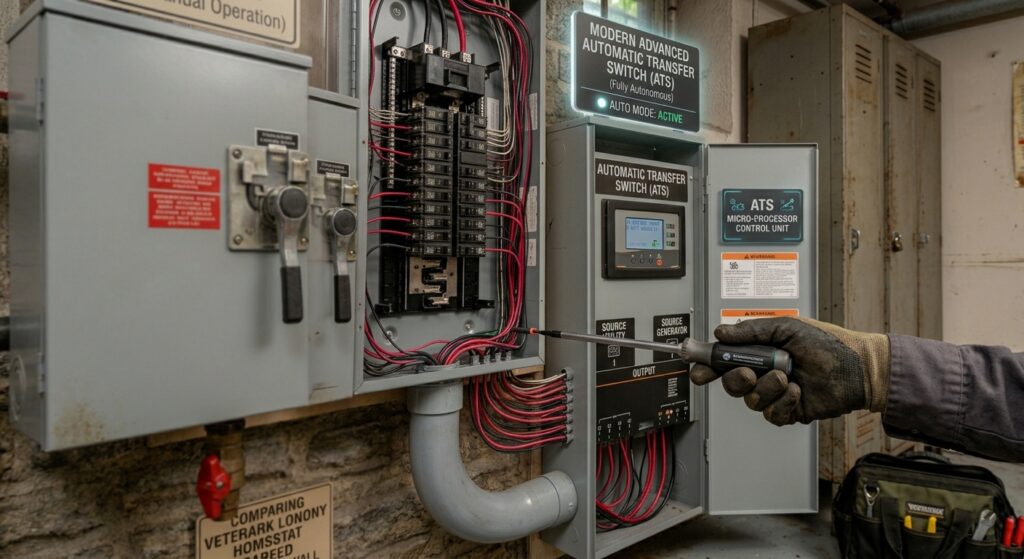
If you’re planning a generator setup, it’s natural to wonder whether you can install a transfer switch yourself and skip the cost of hiring an electrician. The honest answer is more complicated than a simple yes or no. It depends on your skill level, your local electrical code, and — most importantly — what kind of switch and generator you’re working with. Before deciding either way, it helps to understand exactly what the job involves and where the real risks lie. If you haven’t already, our guide on how a transfer switch works explains the safety principle you’ll be working with, and our manual vs automatic transfer switch comparison covers which type you’re likely dealing with.
What “Installing a Transfer Switch” Actually Involves
A transfer switch installation isn’t a simple plug-and-play job. It involves working directly inside or immediately next to your home’s main electrical panel, one of the few places in a house where a mistake can cause serious injury or a fire. The switch has to be wired to intercept power between the utility meter, the main panel, and the generator, in a way that guarantees the two sources are never connected at the same time.
For a manual transfer switch paired with a portable generator, the job typically means running a dedicated circuit from a small subpanel to your main panel, plus installing an exterior power inlet box for the generator’s cord. For an automatic transfer switch paired with a standby generator, the job is considerably more involved. It requires tying directly into your main service, wiring a dedicated generator control circuit, and often coordinating with your utility company.
Is It Legal to Install a Transfer Switch Yourself?
This depends entirely on where you live, and it’s the single most important thing to check before starting. Most municipalities require an electrical permit for any transfer switch installation, regardless of who does the physical work. In many jurisdictions, homeowners are legally allowed to pull that permit and do the work themselves on their own primary residence, provided the work passes inspection. In others, only a licensed electrician can pull the permit at all.
Skipping the permit process isn’t just a legal risk. An uninspected, unpermitted installation can cause real problems later: a home insurance claim can be denied if a fire or electrical damage traces back to unpermitted work, and an unpermitted installation can complicate a home sale, since many buyers’ inspectors specifically check for permit records on electrical panel work.
The Real Risks of a DIY Transfer Switch Installation
Beyond the legal question, there are practical risks worth taking seriously before attempting this yourself.
Working inside a live panel is genuinely dangerous. Even with the main breaker off, the wires coming from the utility meter into your panel remain energized unless the utility itself disconnects service. Working near these lugs without the right training and precautions is a real electrocution risk, not a theoretical one.
A wiring mistake can cause backfeed. As covered in our guide on how a transfer switch works, the entire purpose of the switch is to prevent your home’s wiring from ever connecting to both the grid and the generator simultaneously. A wiring error that defeats this protection can send electricity back down utility lines, putting repair crews at serious risk during a storm, exactly when a downed line is common.
Code violations can fail inspection or void warranties. Generator manufacturers often specify that installation must meet local code and, in some cases, be performed or verified by a licensed electrician for the warranty to remain valid. A failed inspection can also mean redoing work you already paid for in materials and time.
When DIY Installation Is More Reasonable
Some parts of a generator setup carry meaningfully less risk than others, and this is where the honest answer shifts from “probably don’t” toward “it depends.”
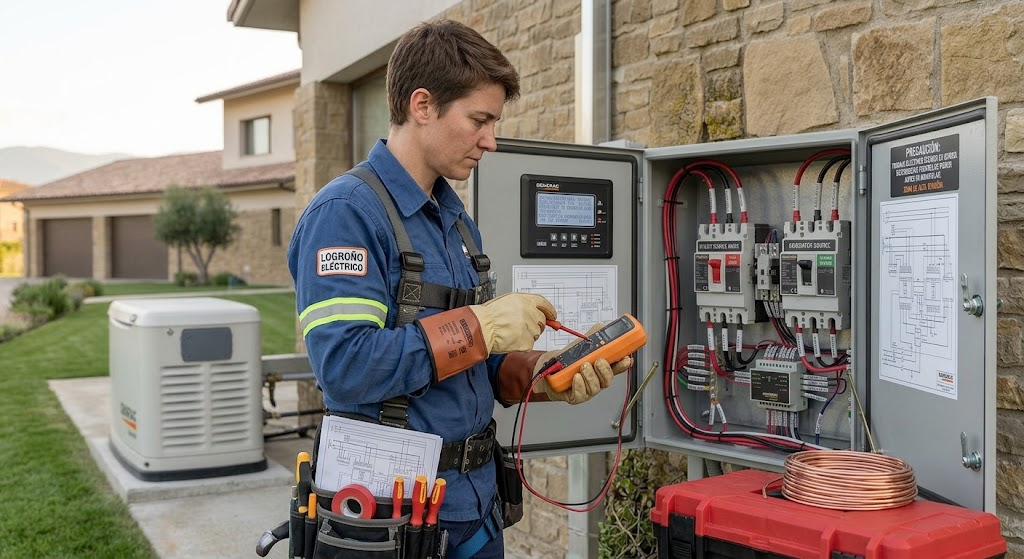
Installing a simple manual transfer switch for a portable generator, where the wiring is more contained and the components are designed for homeowner installation, is a task some experienced DIYers with real electrical experience do take on, in areas where permits allow it. Running the exterior inlet box and non-panel wiring is generally lower-risk than the panel connection itself.
Installing an automatic transfer switch tied to a standby generator is a different situation entirely. The complexity, the code requirements, and the direct connection to your main service make this a job the vast majority of manufacturers, utilities, and electricians all recommend leaving to a licensed professional, and it’s explicitly required in many jurisdictions regardless of skill level.
What to Check Before Deciding
Before attempting any part of this yourself, it’s worth confirming a few things with your local building department: whether homeowner permits are allowed for this type of work on your property, whether an inspection is required (it almost always is), and whether your specific generator’s warranty has any installation requirements attached. Our guide on permits and code requirements for generator installation walks through what these requirements typically look like across different areas.
Final Thoughts
Whether you can install a transfer switch yourself comes down to local permitting rules, the type of switch involved, and an honest assessment of your own electrical experience. A simple manual switch for a portable generator is a more realistic DIY candidate in areas that allow it, while an automatic switch tied to a standby generator is a job the overwhelming consensus, from manufacturers to electricians to code officials, recommends leaving to a licensed professional. The cost of hiring one is almost always smaller than the cost of a failed inspection, a voided warranty, or a genuine safety incident.