
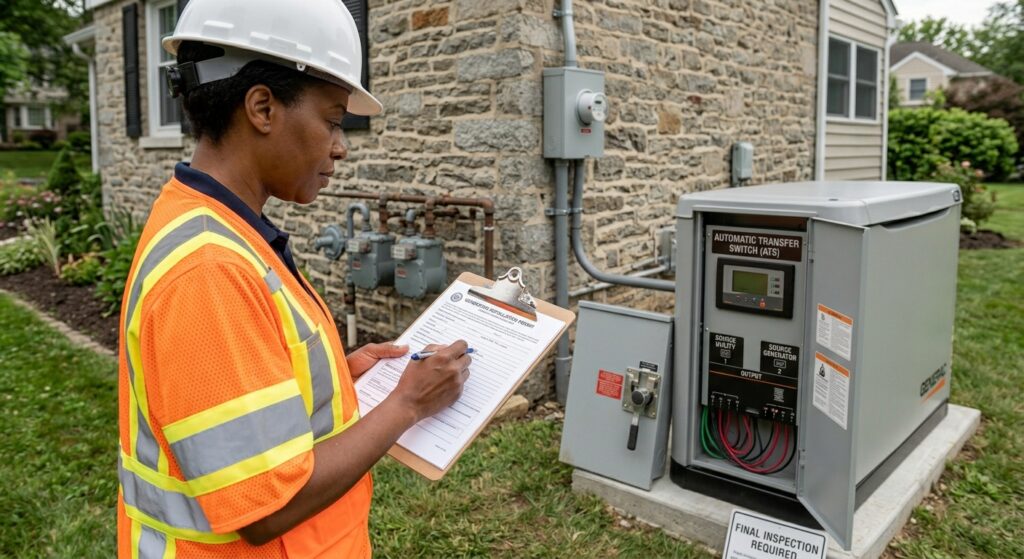
Most homeowners focus on choosing a generator. Fewer think about generator installation permits until it’s time to actually install one. That’s a mistake. Permits and code requirements shape almost every part of the process. They affect where you can place the unit, how it’s wired, and even whether your insurance will pay out later. Skipping this step can cost far more than the permit fee itself. This guide breaks down what to expect, in plain terms, before you call an installer.
Why Generator Installation Permits Exist
Permits aren’t just paperwork. They exist to confirm that an installation meets safety standards set by your local building code. An inspector checks the work in person. They verify that wiring, clearances, and fuel connections all match what the code requires.
This matters more with generators than with many other home upgrades. A generator involves high-voltage wiring, a transfer switch, and often a fuel source like propane or natural gas. Any of these can become a real hazard if installed incorrectly. Permits create a checkpoint that catches mistakes before they turn into fires, gas leaks, or electrocution risks.
What Permits Typically Cover
Requirements vary by city and county, but most generator installations fall under a mix of these categories.
Electrical permits cover the transfer switch and any new wiring between the generator and your home’s panel. This is almost always required, regardless of generator size, because it involves your main electrical service.
Building or zoning permits often apply to standby generators, since these are permanent fixtures placed on a concrete pad. Zoning rules can dictate how far the unit must sit from property lines, windows, and doors. For more on this specific requirement, see our guide on whole house generator noise, since setback rules often overlap with noise concerns.
Fuel permits apply if you’re installing a propane tank or connecting to a natural gas line. These typically involve a separate inspection focused on leak safety and tank placement.
Mechanical permits can apply in some jurisdictions, covering the generator itself as mechanical equipment, separate from its electrical connections.
Setback and Clearance Rules
Nearly every code requires a minimum distance between a standby generator and the home itself, usually for ventilation and fire safety. Many codes also require distance from windows, doors, and property lines. These numbers vary by manufacturer and by jurisdiction, so it’s worth checking both before choosing a spot. A generator placed too close to a window can also violate carbon monoxide safety rules, which we cover in our guide on carbon monoxide safety for generator owners.
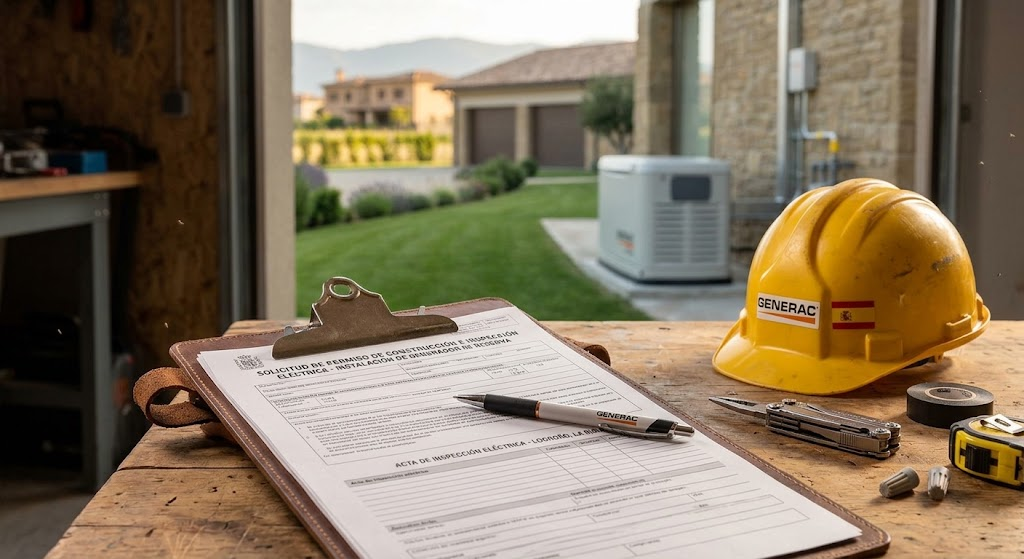
What Happens If You Skip the Permit
Some homeowners assume permits are optional if the work is “just a generator.” This assumption creates real problems down the line.
An unpermitted installation can void your homeowner’s insurance coverage for related damage. If a fire starts near an unpermitted generator setup, an insurer can deny the claim entirely. Unpermitted electrical work can also fail a home inspection years later, when you try to sell. Buyers’ inspectors routinely check for permit records tied to panel and generator work.
Some jurisdictions also issue fines for unpermitted installations discovered after the fact. In certain cases, they can require the homeowner to remove and reinstall the entire system under proper permit and inspection.
Who Pulls the Permit
In most areas, a licensed electrician or generator installer pulls the permit as part of the installation contract. This is usually the simplest path, since professionals already know local requirements. Some jurisdictions allow homeowners to pull their own permit for work on their primary residence. If you’re considering this route, our guide on installing a transfer switch yourself covers what that actually involves, and where the real risks lie.
How to Check Requirements in Your Area
Requirements differ enough between cities that no single article can cover every rule. Start with your local building department’s website, or call directly. Ask about electrical permits, zoning setbacks, and fuel-specific permits together, since generator installations often trigger more than one at once. The National Fire Protection Association also publishes standards, like NFPA 37 and NFPA 54, that many local codes reference directly for generator and fuel installations.
Final Thoughts
Generator installation permits protect more than just code compliance. They protect your insurance coverage, your resale value, and your actual physical safety. Checking requirements before installation takes far less time than fixing an unpermitted setup later. A short call to your local building department, made early, can save real money and real risk down the line.