
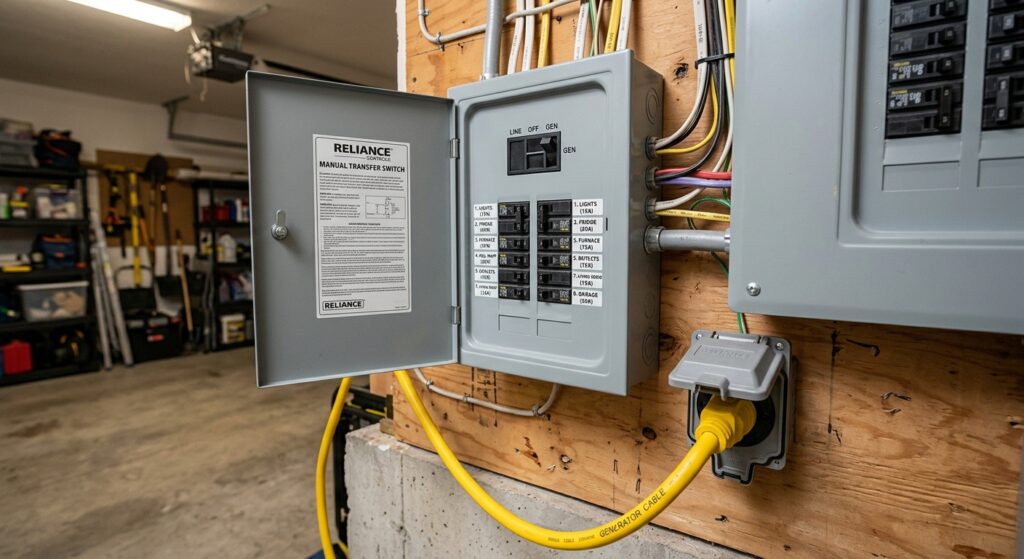
Best transfer switch kits make it possible to power your home safely from a portable generator without running extension cords through windows. Instead of powering a handful of outlets one at a time, a kit lets you switch selected circuits over to generator power. It connects directly through your electrical panel. This guide walks through the top options and what actually matters when choosing one.
What a Transfer Switch Kit Actually Includes
Most kits come with a switch panel, the necessary breakers, and a power inlet box. This box mounts on the outside of your home. Therefore, once installed, you simply plug your portable generator into the outdoor inlet and flip the selected circuit switches inside. For a full explanation of how the underlying technology works, see our guide on how a transfer switch works.
Manual Transfer Switch Kits
A manual kit requires you to flip switches by hand for each circuit you want powered. Reliance Controls’ Pro/Tran series is one of the most popular manual options, typically covering 6 to 10 circuits depending on the model. Because manual kits cost less than automatic systems, they remain the most common choice for portable generator setups. However, they do require you to be present to switch power over manually during an outage.
Interlock Kits vs. Transfer Switch Panels
An interlock kit is a simpler, lower-cost alternative to a full transfer switch panel. Instead of a separate switch box, it installs directly on your existing breaker panel. It physically prevents the main breaker and generator breaker from being on at the same time. As a result, interlock kits are often cheaper and faster to install. However, they typically give you less granular control over which specific circuits receive power. Similarly to a manual transfer switch, they still require someone present to operate them during an outage.
How Many Circuits Do You Actually Need?
Before choosing a kit, list the circuits you want powered during an outage. Most households prioritize the refrigerator, a few lights, the furnace or well pump, and a handful of outlets for phones and medical equipment. Because most kits cover 6 to 10 circuits, this is usually enough for essential backup without needing a larger, more expensive system. For guidance on matching a kit to your generator’s actual output, see our guide on how to choose the right generator size for your home.
Top Transfer Switch Kits Worth Considering
The Reliance Controls 31406CRK is a well-reviewed 6-circuit kit. It is popular for its straightforward installation and clear circuit labeling. For larger households, the Reliance Controls 310CRK covers up to 10 circuits, giving more flexibility for homes with higher essential power needs. Generac’s GenReady power inlet box kits pair well with Generac portable units specifically. This streamlines compatibility if you already own, or plan to buy, a Generac generator. Meanwhile, Champion’s Power Equipment kits offer a similar interlock-based option at a competitive price point for budget-conscious buyers.
Amperage Ratings: 30A vs. 50A
Kits typically come rated for either 30 or 50 amps, and this rating needs to match your generator’s output capacity. A 30-amp kit works well for generators up to roughly 7,500 watts, covering most mid-size portable units. A 50-amp kit, on the other hand, suits larger portable generators or households wanting to power more circuits simultaneously. Therefore, check your generator’s rated output before choosing a kit, since an undersized kit limits how much power you can actually use.
Installation: What You Can and Cannot DIY
The kit itself is a packaged product. However, connecting it to your home’s electrical panel is not typically a DIY-friendly task. Most manufacturers explicitly recommend licensed electrician installation, since improper wiring at the panel creates serious safety risks. For a full breakdown of what work is safe to do yourself, see our guide on whether you can install a generator transfer switch yourself. In addition, our article on permits and code requirements for home generator installation explains the paperwork most kits require. This applies regardless of how simple the box itself looks.
Looking for UL Listing Before You Buy
Not every kit on the market carries proper safety certification. Therefore, check that any kit you consider is UL listed, since this confirms it passed independent testing for safe operation. In addition, most local inspectors will not approve an installation using an uncertified kit, even if it appears to work correctly. Because of this, a UL listing is worth confirming before purchase, not something to discover during a failed inspection.
Manual vs. Automatic: Which Kit Type Fits You?
Transfer switch kits in this price range are almost always manual, not automatic. If you want power to switch over without any action on your part, an automatic system paired with a standby generator is the better fit. It comes at a significantly higher cost, though. Our comparison of manual versus automatic transfer switches breaks down which option matches different budgets and outage patterns.
Matching a Kit to Your Household’s Priorities
Beyond amperage and circuit count, think about which specific appliances matter most in your home. A household relying on a well pump needs that circuit included without question, while a household in a milder climate might prioritize the refrigerator and a few outlets instead. Similarly, homes with a member who depends on medical equipment should build the kit selection around that need first, adding other circuits only if capacity allows. This kind of planning matters more than simply buying the largest kit available.
Frequently Asked Questions
Do all portable generators work with transfer switch kits? Most do, as long as the generator’s output matches the kit’s amperage rating and it has a compatible outlet. Still, it is worth checking compatibility before purchasing.
Can I install a transfer switch kit without an electrician? The kit itself is straightforward, but connecting it to your home’s main panel typically requires a licensed electrician to remain code-compliant and safe.
How much do the best transfer switch kits cost? Most manual kits range from $200 to $500, not including professional installation, which typically adds several hundred dollars depending on your location and panel complexity.