
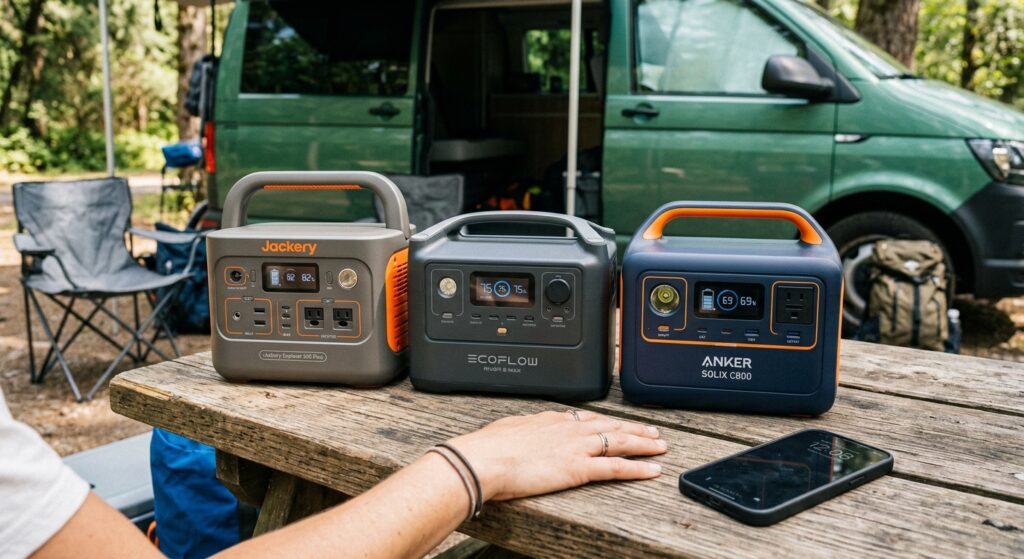
Portable power stations under $500 have become the easiest entry point into backup power. Unlike a whole-home battery or a gas generator, these compact units cost a fraction of the price. However, that lower price comes with real trade-offs in capacity and output. This guide breaks down which models are actually worth buying at this budget, and what to expect once you get one home.
What You Get (and Give Up) Under $500
At this price point, you are buying a smaller battery, not a scaled-down whole-home system. Typically, capacity ranges from 250Wh to 600Wh, enough to charge phones, run a laptop, or power a CPAP machine overnight. However, most models cannot run a refrigerator or a window AC unit for long. In addition, recharge times are often slower than pricier models, especially when using solar input alone. Because of this, portable power stations under $500 work best as a backup for essentials, not as a replacement for a full home battery system.
Jackery Explorer 300 Plus
The Jackery Explorer 300 Plus is one of the most popular options in this range. It offers 288Wh of capacity and 300W of continuous output, enough for small electronics and short appliance use. Jackery’s app support and solar compatibility make it a solid all-rounder. Meanwhile, its compact size makes it easy to store in a closet or car trunk for emergencies.
Anker SOLIX C300
The Anker SOLIX C300 delivers 288Wh of capacity with 300W output, similar to the Jackery. However, it stands out for fast recharge speed, reaching full charge from a wall outlet in under an hour. As a result, it suits households that want quick top-offs before a storm rather than long, planned charging sessions.
EcoFlow River 2
The EcoFlow River 2 offers 256Wh of capacity but punches above its weight with 300W of continuous output and a 600W surge rating. Therefore, it can briefly handle small power tools or appliances with a motor start-up spike. In addition, EcoFlow’s X-Stream charging technology brings it to full charge in about an hour, which is unusually fast for this price range.
Bluetti EB3A
The Bluetti EB3A packs 268Wh of capacity into a compact frame with a notably fast 430W recharge speed. It also includes a built-in flashlight, a small but useful extra during an actual outage. Similarly to the EcoFlow, it prioritizes speed over raw capacity, making it a strong pick for short, frequent outages rather than multi-day events.
Goal Zero Yeti 200X
The Goal Zero Yeti 200X has less capacity, at 187Wh, but its rugged build and reliable brand reputation still make it a popular choice. It is best suited for camping and light emergency use rather than as a primary home backup device. However, for buyers who value durability testing and long-term brand support, it remains a worthwhile option under $500.
How to Choose Between These Models
Start by listing what you actually need to power during an outage. For example, if your priority is keeping phones and a router charged, almost any model on this list will work. On the other hand, if you want to briefly run a small appliance, prioritize surge wattage over total capacity. In addition, consider how often you will recharge the unit. If you expect frequent short outages, fast recharge speed matters more than raw storage. Finally, check whether the model supports solar input, since this becomes valuable during multi-day outages without grid power.
Portable Power Stations vs. Larger Systems
It helps to understand where these units fit in the bigger picture. For a full comparison of larger, whole-home solar generator options, see our guide on the best solar generators for home backup power. Similarly, if your needs grow beyond a single portable unit, our comparison of the best home battery backup systems, including Tesla Powerwall and its rivals, covers the next tier up. For homeowners weighing whether a bigger investment makes sense, our breakdown of home battery backup cost explains what that upgrade actually costs.
Safety Considerations
Because these units use lithium batteries, proper handling matters. According to the U.S. Consumer Product Safety Commission, lithium battery devices should be charged on a hard, non-flammable surface and kept away from extreme heat. In addition, it is worth checking that any model you buy carries UL certification, which confirms it has passed independent safety testing. Therefore, cheaper off-brand alternatives without certification are rarely worth the risk, even at a lower price.
Getting the Most Value Under $500
Prices on these models fluctuate often, especially around major sales events. As a result, it is worth waiting for a seasonal discount if your outage risk is not immediate. Meanwhile, bundling a portable power station with a small folding solar panel extends its usefulness significantly, since you can recharge it during daylight hours without relying on the grid. Overall, matching the unit to your actual use case matters more than chasing the highest capacity number on the box.
What About Warranty Coverage?
Warranty length is an easy way to gauge how much a brand trusts its own hardware. Most models in this range offer 12 to 24 months of coverage. However, Anker and EcoFlow have both extended warranties on select models to 5 years when registered through their apps. In addition, longer warranties often signal more durable internal cells, which matters if you plan to keep the unit charged and ready for years rather than using it occasionally.
Frequently Asked Questions
Are portable power stations under $500 worth buying instead of a generator? For short outages and essential electronics, yes. However, for whole-home backup or multi-day outages, a generator or larger battery system remains more practical.
How long does a portable power station under $500 last during an outage? It depends on what you run, but most models power a phone, a router, and a few small devices for 12 to 24 hours before needing a recharge.
Can you recharge a portable power station under $500 with solar panels? Most models support solar input, though charging speed depends on panel wattage and sunlight availability, and is typically slower than a wall outlet.