
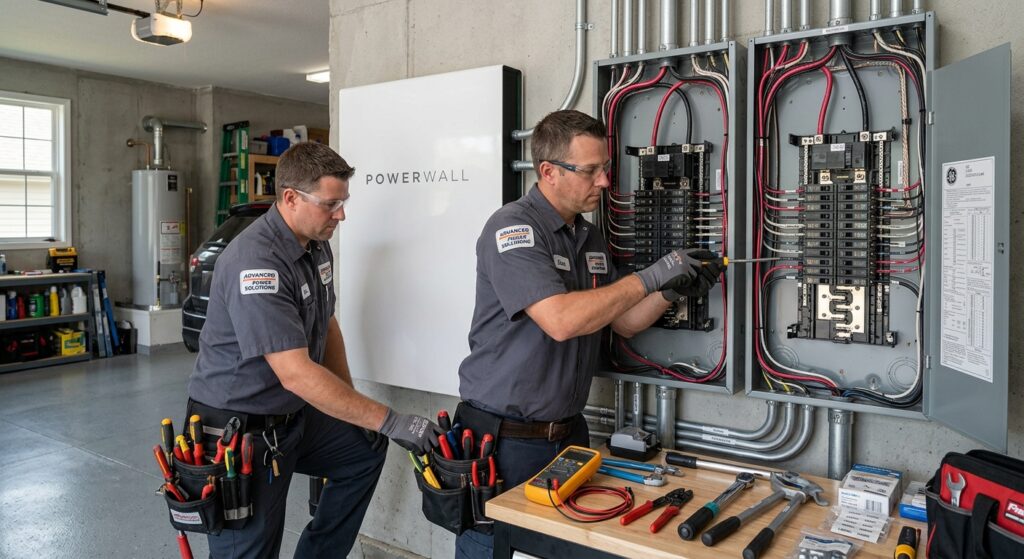
Home battery backup cost is one of the first questions homeowners ask before buying a battery system. In short, most systems range from $10,000 to $20,000 installed. However, the final price depends on brand, capacity, and installation complexity. To make a confident decision, it helps to break down exactly where that money goes.
What Drives Home Battery Backup Cost
Several factors shape the final price. First, battery capacity plays the biggest role, since larger kWh ratings simply cost more to manufacture. Second, the number of units matters. Many homeowners stack two or three batteries for whole-home coverage instead of just a few circuits. Third, installation complexity adds cost, especially if your electrical panel needs upgrading before the battery can connect. Finally, labor rates vary by region, so the same system can cost thousands more in one state than another.
Average Price by Brand
Tesla Powerwall 3 typically costs between $11,000 and $16,000 installed for a single unit, before any incentives. Generac PWRcell runs slightly higher, often between $12,000 and $18,000, depending on how many battery modules you add. EcoFlow Delta Pro and similar portable systems are more affordable, usually landing between $3,500 and $7,000. However, they lack whole-home hardwired integration. Bluetti and Anker systems fall in a similar range to EcoFlow. As a result, they make attractive entry points for homeowners who want backup power without a full electrical upgrade.
Installation Costs Beyond the Battery Itself
Many first-time buyers only budget for the battery and forget the surrounding work. For example, a panel upgrade can add $1,000 to $3,000 if your current panel cannot support the new load. In addition, permitting fees vary by city and typically range from $200 to $800. Meanwhile, pairing the battery with new solar panels, rather than adding it to an existing system, raises the total significantly. In that case, expect the combined project to cost $25,000 to $35,000. Because of this, it is worth getting a detailed, itemized quote rather than a single bundled number.
Incentives That Lower the Real Price
The good news is that home battery backup cost rarely reflects what homeowners actually pay out of pocket. The federal Residential Clean Energy Credit covers 30% of the total cost when the battery is paired with solar. This alone can save thousands on a typical installation. Many states add their own rebates on top of that. For instance, California’s Self-Generation Incentive Program has historically offered additional per-kWh rebates for battery storage. Therefore, it always pays to check state and utility programs before finalizing a quote. In fact, the advertised price and the real price can differ by 30% or more.
Financing Options
Most installers offer financing plans that spread the cost over 10 to 25 years, similar to solar loans. As a result, monthly payments often fall between $80 and $200, depending on system size and loan terms. Some homeowners instead choose a lease or power purchase agreement, which lowers upfront cost but reduces long-term savings. Because every household’s finances differ, it is worth comparing options carefully. Specifically, the best choice depends on how long you plan to stay in the home.
Cost Per kWh: A Better Way to Compare
Sticker price alone can be misleading, since systems vary widely in capacity. A more useful metric is cost per kWh of usable storage. Currently, most home battery systems fall between $700 and $1,000 per kWh installed, before incentives. Therefore, a $12,000 system with 13.5 kWh of capacity and a $16,000 system with 20 kWh may actually offer similar value per dollar. As a result, comparing cost per kWh, not just the total price tag, gives a clearer picture when shopping between brands.
Regional Cost Differences
Location changes the numbers more than most homeowners expect. For instance, labor costs in California or the Northeast often run higher than in the Midwest or South. In addition, states with strong storm activity, such as Texas and Florida, tend to have more installers competing for business, which can push prices down slightly. Because of this, it is worth getting local quotes rather than relying only on national averages when budgeting for a home battery backup system.
Is the Cost Worth It?
For homeowners who experience frequent short outages, a battery often pays for itself through convenience alone. In addition, it eliminates the noise and fuel runs of a generator. For a closer look at how batteries compare to fuel-powered backup, our guide on solar generators vs. gas generators for home backup breaks down the trade-offs in more detail. Similarly, if you are still deciding which brand fits your budget, our comparison of the best home battery backup systems, including Tesla Powerwall and its top rivals, is a useful next step before requesting quotes.
How to Get an Accurate Quote
Before signing a contract, request quotes from at least three installers. Ask each one to itemize the battery, labor, permitting, and any panel upgrades separately. In addition, confirm which incentives the installer will apply directly to your invoice, versus which ones you must claim yourself at tax time. According to EnergySage, an independent solar and battery marketplace, homeowners who compare multiple quotes typically save 10 to 20%. Overall, a little research upfront can meaningfully lower your final home battery backup cost.
Frequently Asked Questions
Is a home battery backup system a good investment? For most homeowners in outage-prone areas, yes, especially when paired with solar and available incentives. However, the payback period depends heavily on local electricity rates and outage frequency.
Can you reduce home battery backup cost by installing a smaller system? Yes. A smaller battery covering only essential circuits, such as a refrigerator and a few outlets, costs significantly less than a whole-home system. It still provides meaningful backup during short outages.
Does home battery backup cost include maintenance? Most modern lithium battery systems require little ongoing maintenance. Still, it is worth budgeting for an occasional inspection, particularly if the battery is paired with solar panels that also need periodic checks.