
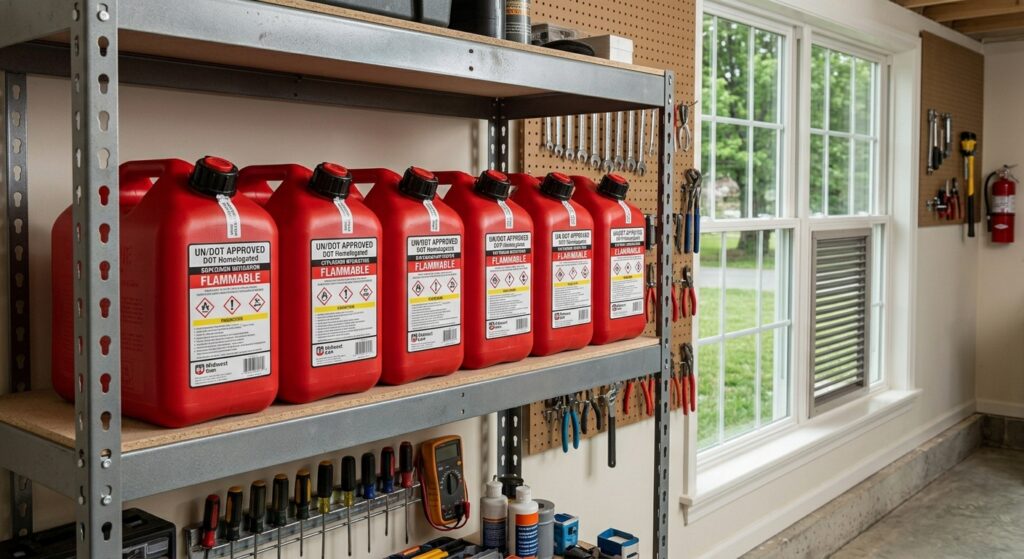
Anyone who relies on a gas-powered generator eventually faces the same question. How much gasoline should you keep on hand, and where should it actually sit while it waits to be used? Knowing how to store gasoline safely matters just as much as knowing how to run the generator itself. After all, gasoline is flammable, its vapors are dangerous to breathe, and improperly stored fuel degrades faster than most people expect. This guide covers the containers, locations, and habits that keep stored fuel both safe and usable when an outage actually happens.
Why Gasoline Storage Rules Exist
Gasoline is far more hazardous sitting in storage than most people assume. Its vapors are heavier than air. As a result, they can collect near the ground and travel toward an ignition source, like a water heater pilot light or an electrical spark, even from several feet away. In other words, a sealed container that seems perfectly safe can still leak enough vapor to create a real fire risk in the wrong location.
Beyond the fire hazard, gasoline is also a health concern in enclosed spaces. For instance, breathing concentrated vapors over time can cause headaches, dizziness, and nausea. This is one more reason ventilation matters as much as the container itself.
Use Only Approved Gasoline Containers
The container matters as much as the location. Store gasoline only in containers specifically designed and labeled for fuel storage. Typically, this means red plastic or metal cans built to relevant safety standards. These containers include features ordinary containers lack. For example, a self-venting design relieves pressure safely, and a purpose-built spout minimizes spills. Construction is also designed to resist punctures and degradation from the fuel itself.
Never store gasoline in glass containers, old water jugs, or any container not explicitly rated for fuel. Glass can shatter. Meanwhile, repurposed plastic containers may not resist gasoline’s solvent properties. Consequently, they can weaken, leak, or fail entirely over time.
What Local and National Codes Actually Require
Gasoline storage isn’t only a matter of common sense; it’s also regulated. The National Fire Protection Association’s NFPA 30 code sets national guidelines for flammable liquid storage, and many local fire departments adopt some version of it directly into municipal code. These rules typically cover approved container types, maximum quantities for residential storage, and required separation from ignition sources or occupied structures.
Because enforcement and specific limits vary by city and county, it’s worth a quick call to your local fire marshal’s office before assuming a given amount or location is compliant, particularly if you’re planning to store gasoline for an extended generator setup rather than just a lawnmower’s worth of fuel.
Where to Store Gasoline at Home
Location is where most storage mistakes actually happen. Gasoline should be stored in a well-ventilated area, away from any potential ignition source. Specifically, that means keeping it away from water heaters, furnaces, electrical panels, and anything with a pilot light or a motor that could spark.
A detached shed is generally the safest option. A well-ventilated garage, away from the home’s living space, works too. Basements, however, are a poor choice, since they tend to be enclosed. As a result, basements can allow vapors to collect near appliances with pilot lights. Storing gasoline inside the living area of a home is never advisable, no matter how well-sealed the container appears to be.
Temperature matters too. Extreme heat accelerates fuel degradation. It also increases vapor pressure inside the container. Therefore, a shaded spot out of direct summer sun is preferable to one that bakes in the heat all afternoon.
How Much Gasoline Should You Actually Keep on Hand?
Many local fire codes limit how much gasoline a homeowner can legally store. Often, this falls somewhere in the range of 5 to 25 gallons, depending on the jurisdiction. So, it’s worth checking local rules before stockpiling fuel ahead of a storm season. Beyond the legal limit, there’s also a practical one. Gasoline doesn’t last indefinitely. Storing far more than you’ll use within a few months, therefore, creates waste and unnecessary risk without much real benefit.
A reasonable approach for most households is to store enough fuel for a few days of expected generator use. This is more realistic than stockpiling for a multi-week outage, especially since storage limits and fuel degradation make that approach impractical anyway.
Ethanol Blends and Why They Degrade Faster
Most gasoline sold at U.S. pumps today is E10, a blend containing up to 10% ethanol. Ethanol is hygroscopic, meaning it actively absorbs moisture from the surrounding air, even through a sealed container over long periods. Once enough water is absorbed, the fuel can undergo a process called phase separation, where the water-ethanol mixture separates from the gasoline and settles at the bottom of the tank or container.
Phase-separated fuel is a common, often misunderstood cause of a generator that won’t start after months of storage, since it isn’t always obvious just from looking at the container. Where available, ethanol-free gasoline is a worthwhile alternative for long-term generator fuel storage, since it resists this specific degradation pathway and generally holds up better over extended periods than standard E10 blends.
Recognizing Degraded Fuel Before It Causes Problems
Beyond phase separation, degraded gasoline often shows recognizable warning signs before it’s used. A noticeably darker color than fresh fuel, a strong sour or varnish-like odor, or visible sediment at the bottom of a clear container are all signs the fuel has broken down and shouldn’t be used in a generator. Running degraded fuel through a carburetor or fuel injection system can leave gummy deposits behind, turning a fuel problem into a more expensive mechanical repair.
If stored fuel shows any of these signs, the safest approach is disposing of it properly, typically through a local household hazardous waste program, rather than attempting to burn it off in the generator or another engine.
Use Only Approved Gasoline Containers
Rotating Your Fuel Supply
Rather than letting stored gasoline sit untouched indefinitely, many generator owners adopt a rotation habit. They use older stored fuel in a vehicle or other gas-powered equipment, then replace it with fresh gasoline. This way, an emergency supply stays consistently within its usable window. Otherwise, degraded fuel might only be discovered when the generator actually needs to start during an outage.
Storing Gasoline for a Generator vs. Storing Propane
Homeowners deciding between fuel types for backup power sometimes weigh gasoline’s storage demands against propane’s. Propane, stored in a sealed pressurized tank, doesn’t degrade the way gasoline does and doesn’t carry the same phase-separation risk, which is one reason some households eventually shift toward propane or dual-fuel generators specifically to simplify long-term fuel storage. Our guide on natural gas vs propane generators covers this trade-off in more detail for anyone still deciding between fuel types.
Final Thoughts
Storing gasoline safely for a generator comes down to several things working together. First, use an approved container. Second, choose a well-ventilated location away from ignition sources, in line with NFPA and local fire code guidance. Third, keep a realistic amount that gets rotated or stabilized rather than left to degrade, and watch for the warning signs of ethanol-related breakdown before it causes a failed start. None of these steps take much effort on their own. However, skipping any one of them turns a routine fuel supply into a real fire or health hazard, sitting quietly in a garage or shed until the moment you actually need it to work.