
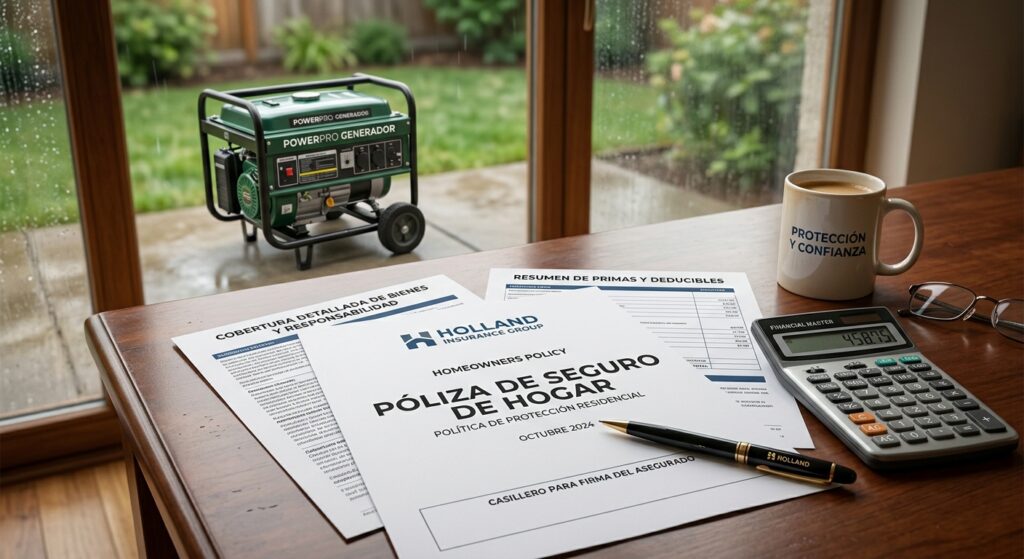
Homeowners insurance generator coverage depends heavily on the type of generator you own and how it was installed. A standby generator permanently wired into your home is treated differently than a portable unit you store in the garage. Understanding this distinction before a storm hits, rather than after a claim gets denied, can save real frustration.
Standby Generators and Dwelling Coverage
A permanently installed standby generator is typically treated as part of your home’s structure. As a result, most standard homeowners policies cover it under dwelling coverage, the same category that protects your roof or HVAC system. Therefore, damage from a covered event, such as a fallen tree or fire, is generally covered up to your dwelling coverage limits. However, coverage usually requires that the generator was installed to code by a licensed electrician, since improper installation can complicate or void a claim.
Portable Generators and Personal Property Coverage
A portable generator falls under personal property coverage instead of dwelling coverage. This matters because personal property limits are often lower, and a high-value generator could exceed what your policy pays out for a single item. In addition, standard personal property coverage is subject to your deductible. A $1,500 generator may not be worth filing a claim over if your deductible is close to that amount. For homeowners considering a portable model, our comparison of the best solar generators for home backup power covers pricing across several options worth insuring properly.
Does Insurance Cover Theft of a Generator?
Portable generators are common theft targets, especially in neighborhoods recovering from a major storm. Fortunately, most homeowners policies do cover theft under personal property coverage, whether the generator was stolen from your home or a job site. However, theft from an unlocked vehicle or an unsecured outdoor location sometimes carries different rules. It is worth confirming this detail with your specific insurer. Because generators can be expensive, some homeowners choose to schedule the item separately for full coverage without a deductible.
What About Power Surge or Mechanical Damage?
This is where coverage gets more complicated. Sudden, accidental power surges are often covered, particularly if caused by a covered peril like a lightning strike. However, gradual mechanical breakdown or wear-and-tear is typically excluded from standard policies, regardless of generator type. Similarly, damage caused by improper fuel, poor maintenance, or DIY installation mistakes is unlikely to be covered, since insurers generally exclude damage resulting from negligence.
Liability Coverage and Generator-Related Incidents
Generators carry real liability risk beyond just property damage. If a generator causes a fire that spreads to a neighbor’s property, your homeowners liability coverage typically applies. Similarly, liability coverage may come into play if a generator contributes to a carbon monoxide injury. This can apply whether the injury involves a family member or a guest. According to the Insurance Information Institute, liability coverage under a standard homeowners policy generally extends to injuries or property damage the policyholder is legally responsible for. This can include generator-related incidents.
Does Owning a Generator Affect Your Premium?
Some homeowners assume a generator automatically raises their premium, but the reality is mixed. A professionally installed standby generator can sometimes lower perceived risk, since it reduces the chance of frozen pipes or extended vacancy during outages. On the other hand, insurers may factor in fuel storage risk for models with larger fuel tanks. Because the effect varies by insurer and state, it is worth asking directly rather than assuming either outcome.
Documenting Your Generator for Insurance Purposes
Good documentation makes any future claim far smoother. Keep the original purchase receipt, note the serial number, and take clear photos of the unit and its installation. In addition, keep the professional installation invoice if you paid for one. It can help prove code-compliant setup if a claim is ever questioned. For homeowners who invested in a larger system, our breakdown of home battery backup cost is a useful reference. It helps when documenting the value of higher-end equipment.
How Regional Risk Factors Into Your Policy
Homeowners in high-outage regions often think about generator coverage differently than those in milder climates. Our guide on where a home generator is worth the investment breaks down which states see the clearest case for backup power. Insurance considerations are part of that broader decision. Similarly, our home power outage checklist covers the non-insurance side of preparation, from food safety to communication planning.
Does a Generator Affect Home Resale Value or Your Mortgage?
A permanently installed standby generator can be a selling point in high-outage regions, since buyers increasingly view backup power as a real feature rather than a luxury add-on. However, it is worth mentioning to your insurer separately from a simple homeowners policy update, since major home improvements sometimes require an updated home valuation. In addition, if you financed the generator installation itself, some lenders treat it similarly to other home improvement loans, which is worth clarifying with your lender rather than assuming it works like a typical appliance purchase.
Getting the Right Coverage Before You Need It
The best time to review your policy is before an outage, not after a claim gets denied. Call your insurer and ask specifically about standby versus portable generator coverage, theft protection, and whether scheduling the item makes sense for your situation. This article offers general information only, not personalized insurance advice, so confirm the specifics with your own licensed agent, since policies and state regulations vary.
Frequently Asked Questions
Does homeowners insurance generator coverage include installation costs? Typically only if the generator itself was damaged by a covered event, not for the original installation cost of a new unit.
Is a generator covered if it is damaged during use in a storm? Often yes, if the damage results from a covered peril like wind or a falling tree, though damage from improper operation is usually excluded.
Do I need a separate policy for an expensive standby generator? Not usually, since it is typically covered under dwelling coverage, but scheduling a high-value portable unit can provide extra protection worth considering.