
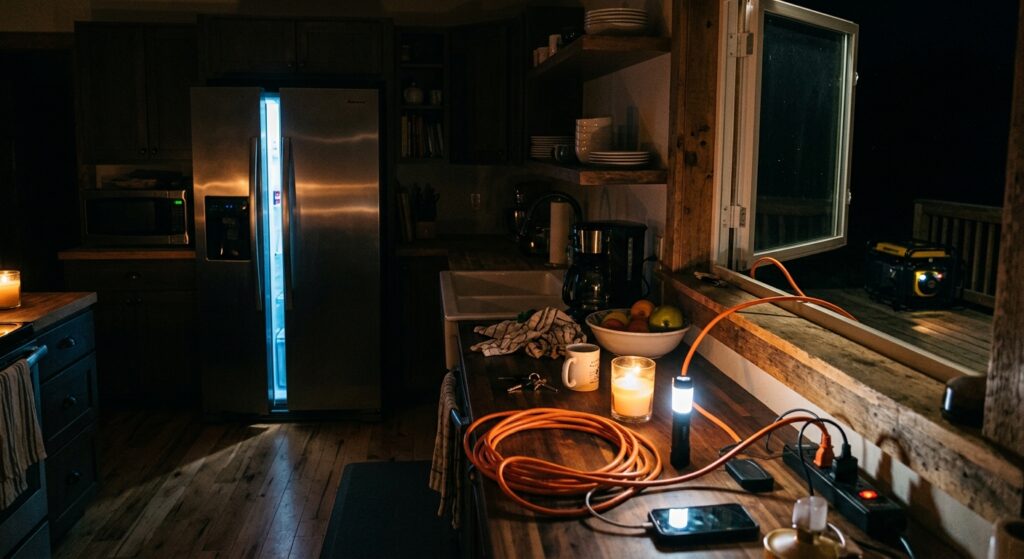
Keeping food cold is usually the first priority when the power goes out. Nobody wants to lose a freezer full of meat or a fridge full of groceries during a multi-day outage. The good news is that refrigerators and freezers are some of the easiest appliances to run on a generator, because they use far less power than most people expect.
The key is understanding the difference between starting watts and running watts, and matching that to the right generator size.
How Many Watts Does a Refrigerator Actually Use?
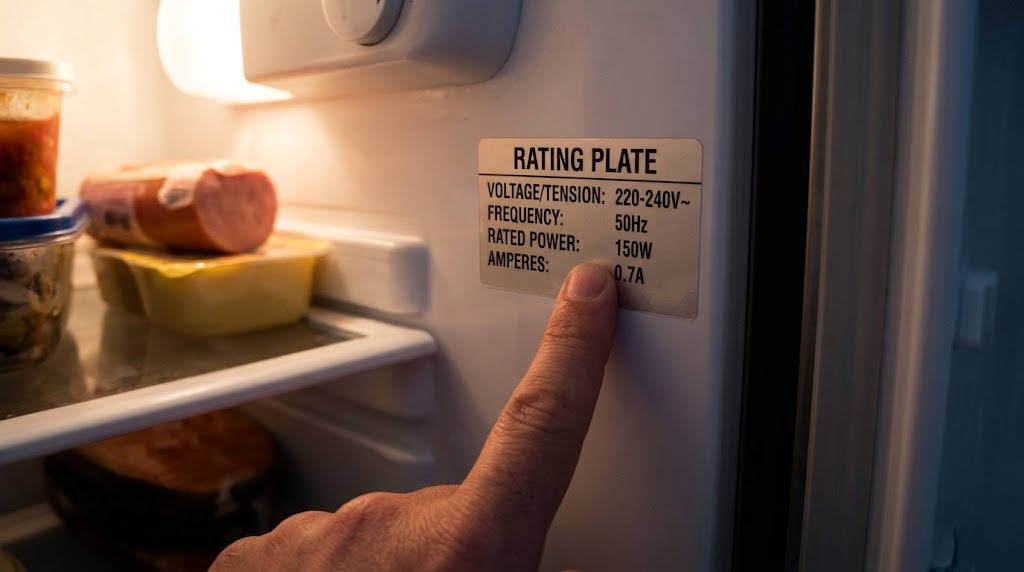
Most residential refrigerators draw between 300 and 800 watts when the compressor first kicks on, but that number is misleading. According to ENERGY STAR, an efficient modern refrigerator spends most of its time cycling on and off rather than running constantly, and its actual running wattage is typically only a third of the number printed on the label. A refrigerator rated at 600 watts, for example, usually settles into a running draw closer to 150-200 watts once the compressor is up to speed.
Freezers behave in a similar way. A standalone chest or upright freezer generally uses 100 to 400 running watts, with a brief surge two to three times higher when the compressor starts.
That startup surge is the number that matters most when sizing a generator, not the running wattage.
How Long Can a Generator Power a Fridge and Freezer?
This comes down to fuel, not electrical capacity. A small inverter generator can easily supply the running watts a fridge and freezer need; the real limit is how long the generator can run before it needs more gas.
A typical portable generator burns through roughly half a gallon to a gallon of fuel per hour at the light load a refrigerator and freezer represent, and most portable tanks hold 3 to 8 gallons. That works out to somewhere between 6 and 16 hours of runtime per tank, depending on the generator’s size and how efficiently it’s loaded. If you refuel every few hours, a portable generator can realistically keep a fridge and freezer cold for as long as the outage lasts, as long as fuel is available. For more on how a generator’s tank size and load translate into hours of runtime, see our guide on choosing the right generator size for your home.
Standby generators tied to a natural gas or propane line remove the refueling problem entirely, since they draw fuel continuously rather than from a tank. That’s one reason many homeowners weighing portable versus standby generators lean toward a fixed system once they start comparing fridge, freezer, sump pump, and furnace loads together.
Sizing a Generator for a Fridge and Freezer Alone
If keeping food cold is the only goal, the math is simple. Add the running watts of the fridge and the freezer together, then check that the generator’s rated starting watts comfortably cover the higher of the two compressors kicking on at the same time.
A small 2,000 to 3,000-watt portable or inverter generator is usually enough to run a standard refrigerator and a separate freezer at the same time, with some headroom left over for a few lights or a phone charger. Larger side-by-side or French door refrigerators with an ice maker draw more power and may need closer to 3,500 watts of starting capacity to be safe.
A Quick Real-World Example
Say you have a 500-watt refrigerator and a 300-watt chest freezer. Based on the running-wattage rule of thumb, the fridge settles into roughly 165 running watts once its compressor is up to speed, and the freezer runs at close to 200 watts. Together, that’s under 400 running watts, well within reach of almost any generator on the market.
The number to watch is the starting surge. If both compressors happened to kick on at the exact same moment, you could briefly see a combined draw of 900 to 1,200 watts. A generator rated for at least 2,000 starting watts comfortably absorbs that spike without stalling, which is why most manufacturers recommend sizing a generator for surge load rather than running load alone.
What Happens If the Generator Is Undersized?
An undersized generator won’t necessarily damage the fridge, but it can trip the generator’s breaker or stall the engine the moment the compressor tries to start, since that surge can briefly spike two to three times higher than the running wattage. If this keeps happening, the compressor is left without power for longer stretches, and food inside starts to warm up between cycles.
Brands like Generac and Champion publish wattage charts specifically for this kind of load-stacking, which is worth checking against your own fridge and freezer’s labels rather than relying on averages alone, especially if you’re also planning to run a furnace blower or well pump on the same circuit.
Keeping Food Safe While You Wait
Even with a generator running, it helps to keep the fridge and freezer doors closed as much as possible. A full freezer holds its temperature for up to 48 hours without any power at all, while a half-full one holds it for closer to 24. Running a generator, even for a few hours a day to bring the temperature back down, extends that window significantly and reduces the fuel needed compared to running the generator around the clock.
If a multi-day outage becomes a genuine safety concern, it’s worth reviewing basic generator operating safety guidance before running any unit for extended stretches, particularly around ventilation and carbon monoxide.
The Bottom Line
A refrigerator and freezer are two of the lightest loads a generator will ever carry. A modest 2,000 to 3,000-watt generator, portable or inverter, can keep both running through most outages, and the real planning question isn’t wattage. It’s fuel: how much you have on hand, and how often you’re willing to refuel to keep the compressors cycling until the power comes back.