
Storms are exactly when a generator gets used the most. They’re also exactly when running one turns most dangerous. Water and electricity don’t mix. A portable generator carries both exposed outlets and a hot engine that manufacturers never built to handle water.
The short answer is no, not directly in open rain. But there is a safe way to run one during a storm. It comes down to where you put it, not whether you use it at all.
Why Rain and Generators Don’t Mix
Manufacturers leave a portable generator’s control panel, outlets, and circuit breakers open to the air on purpose, so the engine can breathe and stay cool. That same open design lets rain drip straight into the outlets or seep into the engine housing. Once moisture reaches a live circuit, it creates a real risk of electric shock for anyone standing nearby. A short circuit can damage the generator itself at the same time.
The Consumer Product Safety Commission has repeatedly warned about this exact combination of hazards ahead of hurricane season. Generator use spikes at the same time storms roll through, which raises the risk further. Wet hands touching a generator, or a generator sitting in standing water, commonly hurt people this way.
The Safe Way to Run a Generator in Wet Weather
The fix isn’t to avoid using the generator. It’s to keep the rain off it while still letting it breathe. If you seal a box or drape a tarp directly over the unit, you trap exhaust and heat. That trades one danger, electrocution, for another, carbon monoxide poisoning.
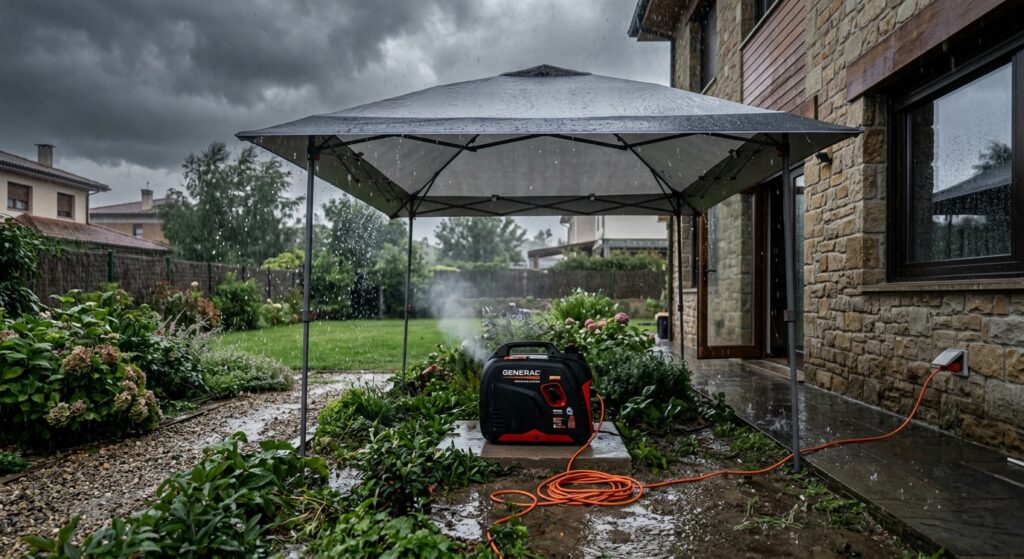
Instead, the generator needs an open-sided cover. Look for something that blocks rain falling from above while leaving the sides open for airflow. A few practical options:
- A purpose-built generator canopy or “tent” that fits your specific model, with open sides
- An overhang, carport, or covered porch, as long as the generator still stays at least 20 feet from doors, windows, and vents
- A simple lean-to: prop a sheet of plywood or a tarp on stakes, then angle it so rain runs off without touching the unit
Whatever cover you use, the generator still needs a dry, level surface to sit on. Standing water underneath it is just as dangerous as rain falling on top of it.
Buying a Canopy vs. Building Your Own Cover
Manufacturers mold a purpose-built canopy to fit a specific generator size. Mesh sides block rain at an angle while still moving air freely, and most carry a wind and rainfall rating well beyond what a backyard storm produces. It’s the most reliable option if you already know you’ll need one every storm season. Setup usually takes a couple of minutes once you’ve done it once.
A DIY lean-to costs less upfront and works fine in a pinch. It does take more judgment to get right, though. The angle has to shed water away from the intake and exhaust, not toward them. Plywood or tarp covers can also shift in strong wind, exactly when you need them to stay put.
If you go this route, stake it down securely and check it partway through the storm. A cover the wind has knocked askew can end up worse than no cover at all.
Either option beats improvising with whatever’s on hand once the storm has already started. It’s worth setting up your preferred cover before the season starts, so it becomes second nature by the time you actually need it.
Protecting the Electrical Connection
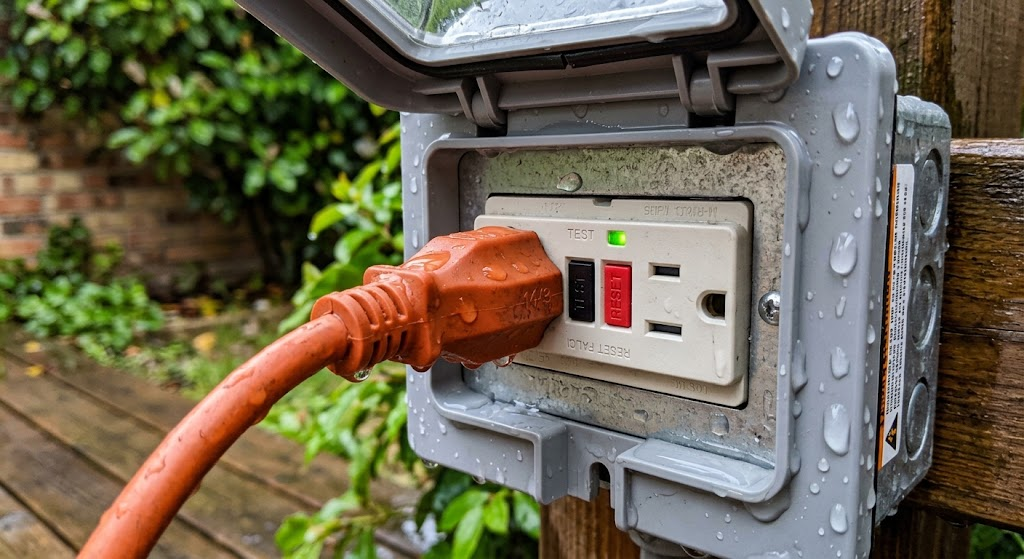
Even after you cover the generator itself, the cords and outlets running from it to your home stay exposed. A ground fault circuit interrupter, or GFCI, cuts power the instant moisture causes a short. Some generators carry one built in; on others, you add a separate GFCI adapter to the cord. Either way, it closes a gap a canopy alone can’t cover.
Choose extension cords built for outdoor use, and lift the connection point off the ground where you can. Puddles tend to collect right where a cord meets an outlet.
What About Built-In Weather Resistance?
Some newer portable and inverter models advertise weather-resistant outlet covers or sealed control panels. These do offer a meaningful step up over older, fully open designs. Even so, “weather-resistant” isn’t the same as waterproof. Manufacturer guidance still calls for a canopy or covered area in sustained rain, no matter what the outlet covers claim to handle. If you’re still comparing models and haven’t settled on a generator yet, check this rating alongside runtime and noise level when you compare portable generators built for camping and home backup.
If the Generator Already Got Wet
Turn it off immediately and disconnect it from any load. Don’t touch it with wet hands or bare skin while power still flows to it. Let it dry out completely, ideally for a full day in a ventilated space, before you try to restart it. Running a generator that’s still wet inside risks a short circuit in the exact components you can’t see from the outside.
If you’re not confident it dried out safely, have a technician check it before the next storm. That beats risking a repeat failure exactly when you need the power most.
A Quick Safety Checklist Before a Storm
- Set up the canopy or covered area before the storm arrives, not once it’s already raining
- Keep the generator at least 20 feet from your home, with the exhaust pointed away from windows and doors
- Use a GFCI-protected outlet or cord
- Never run it in a garage or under a fully sealed cover, even to keep it dry
The same distance and ventilation rules that keep carbon monoxide from building up indoors apply just as much in the rain. It’s worth reviewing how to safely run a portable generator during a power outage alongside your rain plan, especially if this is the first storm season with a new unit. For manufacturer-level detail on grounding and safe operation in wet conditions, OSHA’s generator safety guidance is worth a read as well.
The Bottom Line
A portable generator can absolutely run during a storm, just not out in the open rain itself. An open-sided canopy, a dry and level surface, and a GFCI-protected connection turn a genuine hazard into a manageable one. That small bit of prep is usually the difference between safe backup power and a trip to the emergency room.