
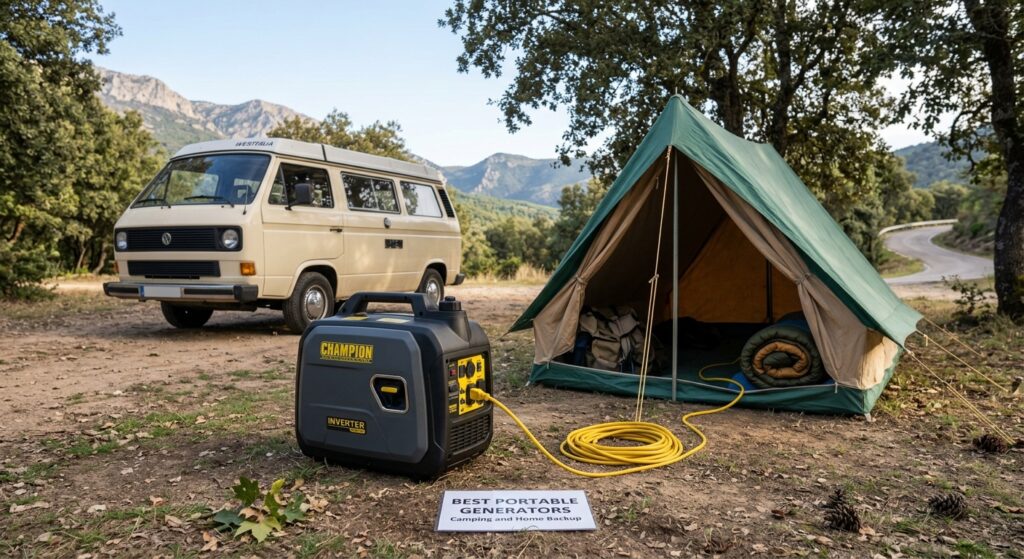
Choosing the best camping generators is mostly a weight problem. A 4,000-watt unit can run a whole cabin, but nobody wants to carry it from the car to a tent site. For most trips, a compact inverter in the 1,000 to 2,000 watt range is the smarter buy. It charges your gear, runs a small fridge, and still fits in the trunk. This guide focuses on what you will actually carry, lift, and run at a campsite.
How Much Power Do You Need at a Campsite?
Camping loads are small. Therefore, you rarely need more than 2,000 watts. The table below shows typical running watts. Check the label on your own gear, because numbers vary by model.
| Device | Typical running watts |
|---|---|
| Phone or tablet charger | 10 to 20 W |
| LED lantern or string lights | 5 to 30 W |
| Laptop | 50 to 100 W |
| Mini fridge or electric cooler | 60 to 150 W |
| Coffee maker | 600 to 1,000 W |
| Electric kettle | 1,000 to 1,500 W |
Add up what you plan to run at the same time. For example, lights, two phones, and a mini fridge total under 400 watts. A coffee maker adds up to 1,000 more. As a result, a 900-watt unit handles a quiet weekend, while a 1,600-watt unit gives larger groups more room. Motors and compressors also need extra power to start, so leave some margin. Our guide on how to choose the right generator size explains starting watts in more detail.
Weight and Handles: What Portability Really Means
Spec sheets list dry weight. However, you carry the generator with fuel in the tank. Gasoline weighs about six pounds per gallon, so a full tank adds roughly 3 to 7 pounds on these models. When you compare the best camping generators, look at carried weight, not dry weight.
Use these rules of thumb:
- Under 30 pounds: easy to carry with one hand over a long distance.
- 30 to 45 pounds: fine with a good handle, but you will feel it on a long walk from the parking area.
- Over 45 pounds: plan on a cart, wheels, or a second person to help lift.
Handle design matters as much as weight. A top handle that sits over the center of gravity keeps the unit level. A wide, padded handle spreads the load across your palm. Also check the footprint. A narrow, boxy body fits in a trunk beside a cooler and stays stable on a rough site. Finally, choose a recoil start that pulls easily, because you will not always have a flat spot to work on.
Best Camping Generators Under 2,000 Watts
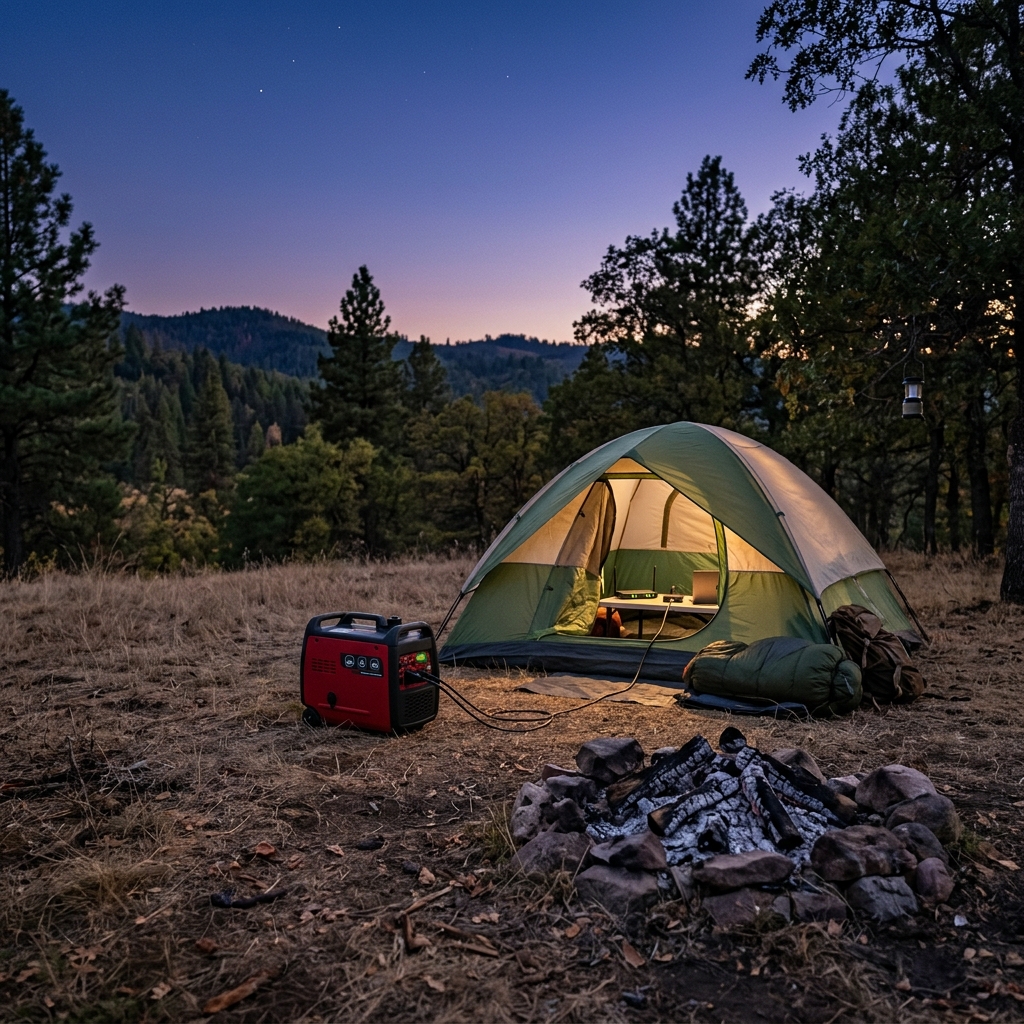
These two picks are the best camping generators for most trips. Both are inverter models, so they run quietly and produce clean power for phones and laptops. Prices change often, so check current listings before you buy.
| Model | Starting / running watts | Dry weight | Runtime at one-quarter load | Noise |
|---|---|---|---|---|
| Honda EU1000i | 1,000 / 900 W | 28.7 lb | 6.8 hours | 42 to 50 dB(A) |
| Yamaha EF2000iSv2 | 2,000 / 1,600 W | 44.1 lb | 10.5 hours | 51.5 to 61 dBA |
Honda EU1000i: Best Ultralight Pick
The Honda EU1000i weighs 28.7 pounds, according to Honda. It makes 1,000 starting watts and 900 running watts. That covers lights, chargers, a laptop, and a small cooler at the same time. The 0.55-gallon tank runs 3.0 hours at rated load and up to 6.8 hours at one-quarter load.
In addition, it is rated at 42 to 50 dB(A), and its CO-Minder sensor shuts the engine down if carbon monoxide builds up. Two identical units can also be linked with an optional cable for up to 2,000 watts. That gives you a light unit for trips and more power when you need it.
However, it has drawbacks. Honda lists it at $999, which is a lot for 900 running watts. It also has a recoil start only. Finally, it cannot run a coffee maker and a fridge together if the total passes 900 watts.
Yamaha EF2000iSv2: Best for Bigger Groups
The Yamaha EF2000iSv2 delivers 2,000 starting watts and 1,600 running watts, according to its listed specifications. It weighs 44.1 pounds and has an extra-large carry handle. The 1.1-gallon tank runs up to 10.5 hours at one-quarter load. As a result, it can power a coffee maker, a fridge, and lights together on a weekend trip.
Moreover, Yamaha backs it with a three-year limited warranty. Noise runs from 51.5 dBA at one-quarter load to 61 dBA at full load. That top figure is fine for most sites. However, some campgrounds cap noise at 60 decibels, so keep the load modest after dark.
The trade-off is weight. At 44.1 pounds, it is about 15 pounds heavier than the Honda. Therefore, it suits drive-up sites better than long carries.
Campground Rules and Safety
Even the best camping generators must follow campground rules, and many campgrounds limit generator hours. For example, Smokemont Campground in Great Smoky Mountains National Park lists generator hours of 8 AM to 8 PM and a 60 decibel cap on its Recreation.gov page. Other parks and forests set their own hours. Therefore, check the rules before you pack, and ask the host how noise is measured.
Safety comes first at a campsite too. The U.S. Consumer Product Safety Commission says to run portable generators outdoors only, at least 20 feet from buildings, with the exhaust pointed away from windows and doors. Treat tents, campers, and vehicles the same way. Never run a generator inside or next to a sleeping area. Choose a model with a carbon monoxide shut-off. For more detail, read our guide to running a portable generator safely and our carbon monoxide safety rules.
Packing Checklist for Your First Trip
- A fuel can approved for gasoline, filled only as much as you need.
- A heavy-duty outdoor extension cord rated for your loads.
- A battery-powered carbon monoxide alarm for your camper or cabin.
- The owner’s manual, in case you need the oil or fuel details.
- A dry, flat spot for the generator, away from your tent.
Can a Camping Generator Also Back Up Your Home?
Yes, for light needs. A 900-watt or 1,600-watt unit can run a refrigerator, a few lights, and phone chargers during a short outage. However, it will not run central air, an electric stove, or a well pump. If home backup is your main goal, compare our list of best generators under $1,000. If you only need to charge phones and a laptop quietly, a power station may be enough. See our picks for portable power stations under $500. You can also stretch your fuel with the tips in our guide on how to extend the runtime of a portable generator.
Final Thoughts
The best camping generators keep weight low and power modest. Pick the Honda EU1000i if every pound counts. Pick the Yamaha EF2000iSv2 if you need to run a few more devices at once. In both cases, check campground rules, place the unit outdoors and away from your tent, and carry only the fuel you need.