
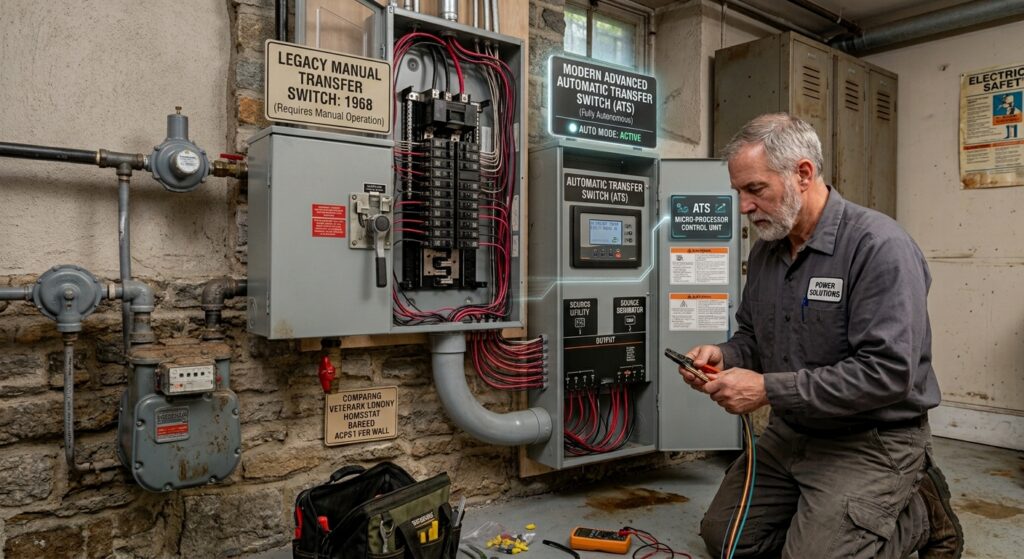
Choosing between a manual vs automatic transfer switch is one of the biggest decisions in any generator installation. Both switch types do the same core job. They keep your home connected to only one power source at a time. But they differ enormously in cost, convenience, and how much you’ll need to do yourself during an outage. Getting this choice right matters more than most people expect, especially if outages in your area tend to happen at night or while you’re away from home. If you haven’t read it yet, our guide on how a transfer switch works explains the safety principle behind both types in more detail.
What Separates a Manual vs Automatic Transfer Switch
The core function is identical. Both switch types isolate your home from the utility grid before allowing generator power in. The difference comes down to one thing: who triggers that switch.
A manual transfer switch requires a person to act. You start the generator yourself, then flip a set of switches or a rotary dial to route power to selected circuits. An automatic transfer switch does this on its own. It senses an outage, starts a standby generator, and switches over within seconds, with no one needing to be home at all.
That single distinction shapes almost every other difference between the two systems, from price to what kind of generator each one pairs with.
Manual Transfer Switches: Lower Cost, More Hands-On
A manual transfer switch is the more affordable option by a wide margin. Hardware typically costs a few hundred dollars, and installation is simpler since there’s no automatic sensing circuitry involved. This makes it a common pairing with portable generators, which you already have to physically set up and start during an outage anyway.
The trade-off is direct human involvement every single time the power goes out. You need to go outside, start the generator, let it warm up, and then manually operate the switch to route power to your chosen circuits. This works fine if someone is reliably home during outages. It becomes a real limitation for anyone who travels often, works overnight shifts, or wants power restored automatically while asleep.
Manual switches also typically power a limited, pre-wired set of circuits rather than the whole house. Homeowners usually prioritize the refrigerator, a well pump, a furnace blower, and a handful of outlets, since portable generators rarely have enough output to run an entire home at once.
Automatic Transfer Switches: More Cost, Zero Effort
An automatic transfer switch is wired directly to a standby generator, the kind permanently installed outside your home. It monitors incoming utility power continuously. The moment it detects an outage, it starts the generator and switches your home over, usually within 10 to 20 seconds. When utility power returns, it reverses the process automatically, with no input from you at all.
This convenience comes at a higher price. Automatic switches cost more than manual ones, and they’re only paired with standby generators, which carry a much larger price tag than portable units. Installation also requires a licensed electrician in nearly every jurisdiction, since the switch ties directly into your home’s main electrical panel.
The payoff is real peace of mind. An automatic system keeps essential systems running whether you’re asleep, at work, or on vacation, which matters a lot for homes with medical equipment, sump pumps, or livestock that depend on continuous power.
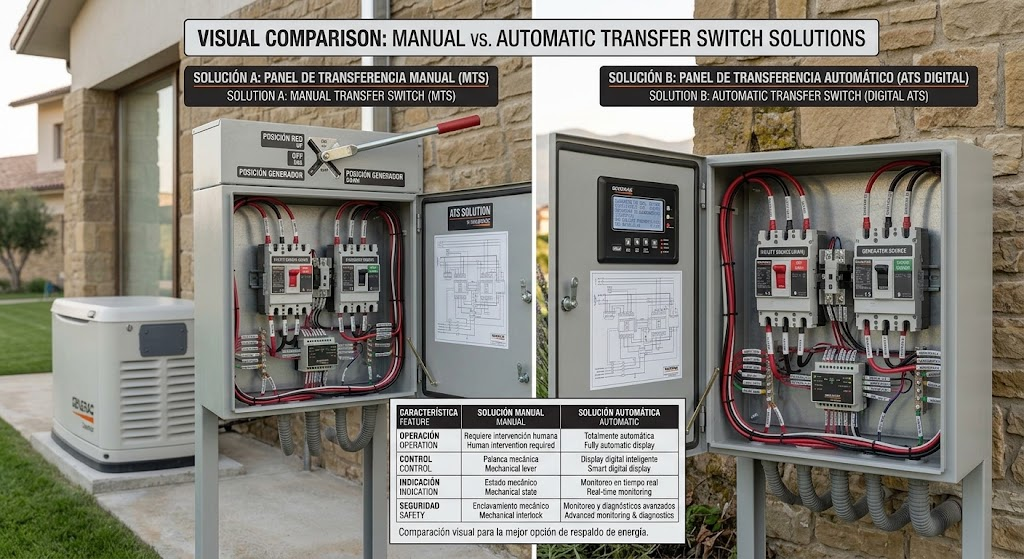
Comparing Manual vs Automatic Transfer Switches by Situation
Some situations make the choice fairly obvious once you look at how you’d actually use the system.
Choose manual if: you already own or plan to buy a portable generator, you’re working with a tighter budget, and someone is usually home to operate the switch during an outage. It’s also a reasonable choice for occasional, short outages where a short delay before power returns isn’t a serious problem.
Choose automatic if: you travel frequently, live alone, or can’t reliably be home when outages happen. It’s also the better fit for homes with a well pump, medical devices, or anything that genuinely cannot lose power for more than a few minutes without real consequences.
Cost Comparison at a Glance
Manual transfer switch hardware generally runs $200 to $500, plus installation. Automatic transfer switches typically cost $400 to $900 for the hardware alone, before factoring in the standby generator itself, which is a separate and much larger expense. For a full breakdown of what a complete standby setup costs from generator to wiring, see our guide on how much a whole-house generator costs installed.
It’s worth remembering that the switch is rarely the biggest line item either way. The generator itself, whether portable or standby, usually accounts for most of the total project cost.
Can You Switch From Manual to Automatic Later?
In many cases, yes. If you start with a manual switch and portable generator, you can often upgrade to a standby generator with an automatic switch later, though this typically means new wiring and a new switch rather than converting the existing hardware. Homeowners planning to eventually add a full standby system sometimes skip the manual option entirely, to avoid paying for equipment they’ll replace within a few years. According to guidance from the U.S. Department of Energy on backup power planning, matching your switch type to your long-term power needs from the start tends to save money overall.
Final Thoughts
There’s no universally “better” choice in the manual vs automatic transfer switch decision. It depends entirely on your budget, your generator type, and how much manual effort you’re willing to take on during an outage. A manual switch is the practical, affordable choice for homeowners with a portable generator and someone usually home to run it. An automatic switch is worth the extra cost for anyone who needs power restored instantly, without lifting a finger, no matter when an outage happens.