
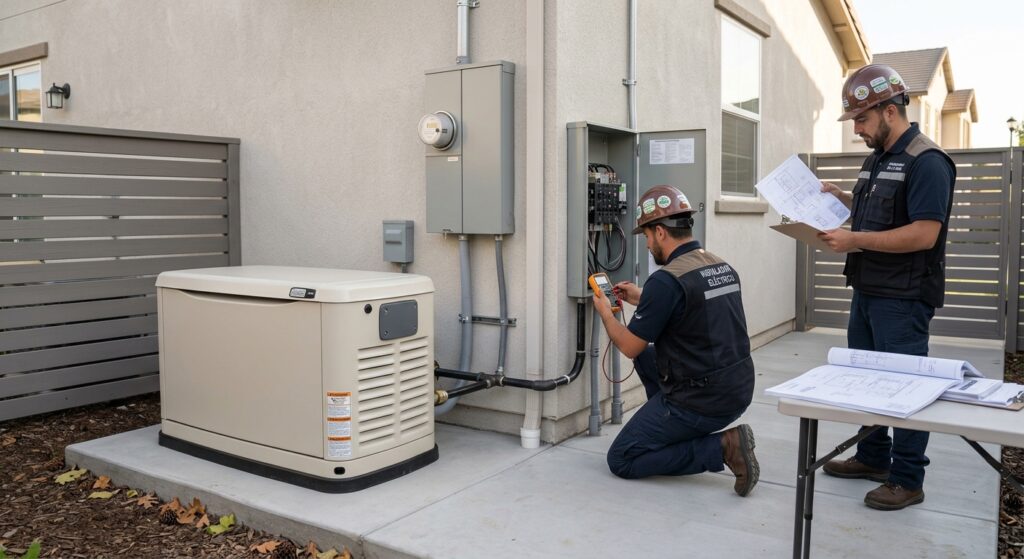
Understanding the real whole-house generator cost installed means looking past the unit price alone, since installation, permits, and site work often add as much to the final bill as the generator itself. Many homeowners are surprised to learn that a “$4,000 generator” frequently costs $8,000–$12,000 once everything is factored in.
This guide breaks down every cost component of a whole-house generator installation, by home size, so you can budget accurately before getting quotes.
Quick Answer
A whole-house generator installed typically costs $6,000–$15,000 total, depending on home size and generator capacity, with the unit itself representing roughly 40–55% of that total and installation, permits, and site work making up the rest.
Cost by Home Size and Generator Capacity
| Home size | Recommended generator size | Unit cost | Total installed cost |
|---|---|---|---|
| Small (under 1,500 sq ft) | 10,000–12,000W | $2,500–$3,500 | $6,000–$8,500 |
| Medium (1,500–2,500 sq ft) | 14,000–17,000W | $3,500–$5,000 | $8,500–$11,500 |
| Large (2,500–4,000 sq ft) | 18,000–22,000W | $5,000–$6,500 | $11,000–$14,000 |
| Very large (4,000+ sq ft) | 22,000W+ or multiple units | $6,500+ | $14,000–$20,000+ |
These ranges assume a natural gas connection is already available at the property; propane setups and homes requiring gas line upgrades typically land toward the higher end of each range.
What’s Actually Included in “Installed” Cost
The generator unit itself typically represents 40–55% of the total installed cost, varying by brand and capacity.
Professional installation labor usually runs $3,000–$5,000, covering electrical work, the automatic transfer switch, and connecting the unit to your home’s electrical panel.
Concrete or composite pad required by most local codes for a stable, code-compliant base runs $200–$500.
Gas line work varies enormously depending on whether your existing line can support the generator’s demand. If it can, expect $300–$800; if it requires upsizing or a longer run from the meter, costs can reach $1,500–$3,000.
Permits and inspection fees typically add $100–$500, depending on your municipality, and are non-negotiable in most areas for a permanent electrical and gas installation.
Factors That Push Cost Higher
Distance from the gas meter and electrical panel. The farther the generator needs to be sited from either connection point, the more trenching and wiring labor is required, which can add $500–$2,000 depending on distance and terrain.
Local permit complexity. Some municipalities require multiple inspections (electrical, gas, structural) rather than one combined visit, extending both timeline and cost.
Propane instead of natural gas. If no natural gas line is available, a large propane tank installation adds $1,500–$3,000 to the project, though it offers the advantage of not depending on a utility gas supply during a widespread outage.
Difficult site conditions. Sloped yards, rocky soil, or limited access for equipment can increase labor time and cost, sometimes significantly in older properties with tight side-yard clearances.
How to Get an Accurate Quote
Get at least three quotes from licensed installers, and ask each to break down unit cost, labor, pad, gas line work, and permits separately rather than providing one lump sum. This makes it much easier to compare quotes apples-to-apples and spot where one contractor’s estimate differs significantly from another’s on a specific line item.
Confirm whether the quote includes the annual maintenance contract many installers recommend, since this ongoing cost (typically $150–$300/year) isn’t part of the installed price but affects the generator’s total cost of ownership. For help choosing the right generator brand before requesting quotes, see our comparison of Generac vs Champion vs Briggs & Stratton.
Financing and Cost-Offsetting Options
Many installers offer financing plans that spread the installed cost over 12–60 months, which can make a $10,000 project more manageable as a monthly payment rather than a lump sum. Additionally, some insurance companies offer modest homeowner’s insurance discounts for having a standby generator installed, since it reduces certain storm-related claim risks like frozen pipes or sump pump failures during extended outages.
3 Mistakes That Inflate Installation Cost Unnecessarily
- Accepting the first quote without comparing at least two or three others. Installation labor costs can vary significantly between contractors for the identical scope of work.
- Oversizing the generator beyond actual home needs. A unit sized well beyond your realistic load not only costs more upfront but can also increase gas line and electrical work requirements unnecessarily.
- Skipping the maintenance contract to save money upfront, then facing a larger repair bill later. Routine maintenance catches small issues before they become expensive failures, and many warranties require documented maintenance to remain valid.
Frequently Asked Questions
What is the average cost of a whole-house generator installed?
Most homeowners pay between $8,000 and $12,000 for a mid-size system fully installed, though costs range from $6,000 for smaller homes to $20,000+ for very large properties.
Does homeowners insurance cover generator installation?
Insurance typically doesn’t cover the installation cost itself, though some insurers offer modest premium discounts for having a standby generator, since it reduces certain weather-related claim risks.
Is it cheaper to install a generator on natural gas or propane?
Natural gas is typically cheaper to install if a line already exists at the property; propane installations add the cost of a tank but don’t depend on a utility gas connection.
How long does a full installation take?
On-site work typically takes 1–3 days, but permitting and gas company scheduling can extend the total project timeline to 2–6 weeks depending on the municipality.
Bottom Line
A realistic whole-house generator cost installed lands between $6,000 and $15,000 for most homes, with unit size, gas line work, and local permit requirements driving most of the variation. Getting itemized quotes from multiple licensed installers, rather than comparing single lump-sum totals, is the most reliable way to avoid overpaying for the same scope of work.