
A generator that sits unused for months can fail at the exact moment you need it most. That’s why how often should you run your generator is one of the most practical questions any owner can ask. Regular use, often called “exercising” the generator, keeps its engine, battery, and internal components in working order. Without it, small problems can build up quietly until an outage reveals them all at once. This guide covers the recommended schedule, why it matters, and what actually happens when a generator sits idle too long.
Why Idle Generators Fail When You Need Them Most
Engines are built to run, not to sit still indefinitely. When a generator goes unused for long stretches, several problems can develop at once. Gasoline breaks down over time, as covered in our guide on how to store gasoline safely, and that same degradation happens inside a generator’s own fuel system if it isn’t run regularly. Old fuel can gum up carburetors and injectors, which often causes rough starting or complete failure to start.
Batteries also lose charge gradually, even when not powering anything directly. As a result, a generator with a dead battery may not start automatically, even if every other component is in good condition. In addition, seals and gaskets can dry out without regular engine heat and lubrication cycling through them, which increases the risk of small leaks developing over time.
How Often Should You Run Your Generator: The Standard Schedule
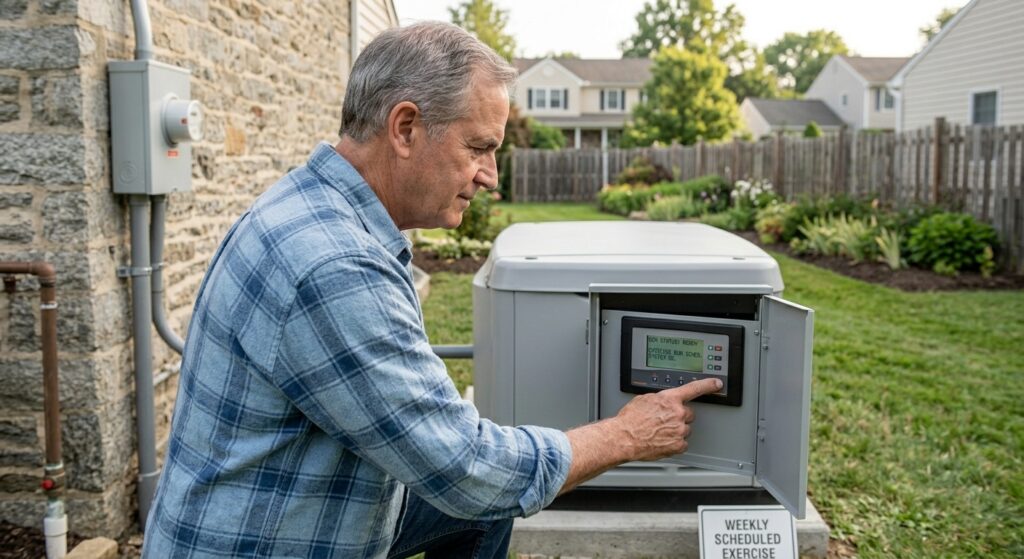
Most manufacturers recommend running a standby generator for about 20 to 30 minutes under load, roughly every one to two weeks. Many modern standby units include a built-in self-test feature that handles this automatically, starting the engine on a preset schedule without any input from the homeowner.
Portable generators require more manual attention, since they lack this automatic feature. For portable units, running the engine for 20 to 30 minutes every month is a reasonable baseline, ideally under some kind of load rather than just idling with nothing connected. Idling alone doesn’t fully exercise the charging system or reveal problems that only appear once the engine is actually working.
Why Running Under Load Matters
Starting a generator and letting it idle for a few minutes is better than nothing. However, it doesn’t tell you much about how the unit performs under real conditions. Running it under an actual electrical load, even something as simple as a space heater or a shop light, reveals problems that idling alone won’t show. For example, a weak voltage regulator or a struggling alternator often only becomes obvious once the generator is asked to do real work.
This is one reason automatic standby systems are considered more reliable overall. Their scheduled self-tests typically include a brief connection to the home’s electrical system, which more closely mirrors how the generator will actually be used during a real outage. OSHA’s guidance on safe generator operation recommends this kind of routine load testing as part of any generator ownership plan.
What Happens Inside the Engine During a Long Idle Period
It helps to understand the mechanics behind why idle time causes damage, not just that it does. Inside a stationary engine, oil settles away from moving parts over time, leaving some components briefly under-lubricated during the first few seconds of a cold start. This is a normal part of any engine’s operation, but it becomes more damaging the longer a generator sits between runs, since deposits and residue have more time to build up on valves, rings, and cylinder walls.
Rubber and plastic components inside the fuel and cooling systems also degrade with inactivity in a way that’s easy to overlook. Gaskets can dry out and shrink slightly when they aren’t regularly exposed to the heat and pressure of normal operation, which is part of why a generator that hasn’t run in over a year sometimes develops small fuel or oil leaks that weren’t present before storage.
How Exercise Schedules Differ by Generator Type and Use Case
Not every generator needs the exact same schedule. A whole-house standby unit that’s the sole backup power for a home with medical equipment or a well pump benefits from sticking closely to the manufacturer’s recommended one-to-two-week interval, since reliability matters more than convenience in that situation. A portable generator kept mainly for occasional camping trips or light seasonal use can reasonably follow a monthly schedule instead, since it sees more natural use throughout the year regardless of a formal exercise routine.
Generators in regions with pronounced storm seasons are often exercised more frequently in the weeks leading into that season, then returned to a normal schedule once the highest-risk months pass, treating the routine test runs as a supplement to, rather than a replacement for, the pre-season checks covered in our generator maintenance checklist.
Signs Your Generator Isn’t Being Exercised Enough
A few warning signs suggest a generator has gone too long without running. Difficulty starting, rough idling, or unusual smoke on startup can all point to stale fuel or a battery that’s lost too much charge. A generator that stalls shortly after starting, rather than settling into a steady idle, is another common symptom of infrequent use.
If any of these signs show up during a routine exercise run, it’s worth addressing them before an actual outage, rather than discovering the problem for the first time when the power is already out.
What to Watch During Each Exercise Run
A useful exercise run isn’t just “start it and walk away.” Listen for unusual knocking, rattling, or surging in engine speed, all of which can indicate a developing mechanical issue. Watch the exhaust for excessive smoke, particularly a thick blue or black color, which often points to an oil or fuel mixture problem worth investigating before it worsens. If the unit is connected to a load, check that voltage output stays steady rather than fluctuating, since inconsistent voltage can quietly damage sensitive electronics plugged into the generator during an actual outage.
Keeping a simple log of exercise dates and any observations noticed during each run makes it easier to spot a developing pattern, rather than relying on memory to notice that starting has gradually gotten harder over several months.
Building an Exercise Routine Into Regular Maintenance
Exercising a generator works best as part of a broader maintenance habit, rather than a standalone task. Pairing a monthly test run with an oil check, a quick visual inspection for leaks, and a look at the air filter turns a five-minute task into meaningful preventative care. Our guide on preparing a generator maintenance checklist before storm season covers how to build these smaller habits into a full seasonal routine.
Setting a recurring reminder, whether on a phone calendar or a physical note near the generator, helps this habit stick. Otherwise, it’s easy to let weeks or months slip by without realizing it, especially outside of storm or winter season when the generator isn’t top of mind.
Final Thoughts
Running a generator regularly isn’t just a suggestion buried in the owner’s manual. It’s the difference between a machine that starts reliably during an actual outage and one that fails at the worst possible moment. A consistent schedule, whether automated through a standby system’s self-test or manually tracked for a portable unit, catches small problems early. As a result, it keeps the generator genuinely ready, rather than merely present, when you finally need it.