
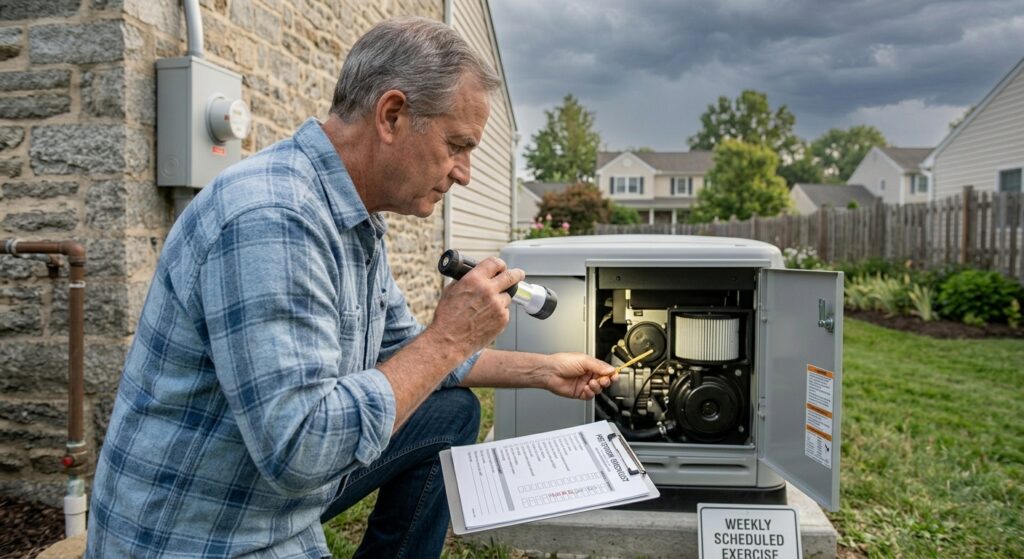
Waiting until a storm warning to check your generator is one of the most common mistakes homeowners make. A generator maintenance checklist completed weeks before storm season gives you time to fix small problems before they become the reason your generator fails during an actual outage. This guide walks through the specific checks worth doing, in the order that makes the most sense, before hurricane season, winter storms, or any period where outages become more likely.
Why Pre-Season Maintenance Matters More Than Emergency Checks
Checking a generator the night before a storm hits leaves almost no room for fixing anything you find. A cracked hose, a dead battery, or stale fuel discovered at that point usually means running the outage without backup power at all. Completing the same checks a few weeks earlier gives you time to order parts, schedule a repair, or simply run the generator enough times to resolve smaller issues on its own.
This is also why regular exercising, covered in our guide on how often you should run your generator, pairs naturally with a seasonal checklist. Exercising catches problems as they develop. A pre-season checklist catches anything that slipped through between those regular runs.
Check the Battery First
A generator’s battery is one of the most common points of failure, and it’s worth checking before anything else. Look for corrosion on the terminals, and clean it off with a wire brush if present. Test the battery’s charge with a simple voltmeter if you have one available, since a battery that reads low can still start the engine occasionally, then fail without warning during a real outage.
Many standby generators include a battery charger that runs continuously, but chargers themselves can fail silently. As a result, it’s worth confirming the charger is actually working, not just assuming it is because it’s plugged in.
Inspect the Fuel System
Fuel-related problems are one of the most common reasons a generator fails to start, particularly after months of light use. Check stored gasoline for the discoloration or strong odor that often signals degraded fuel, and replace it if either sign is present. Our guide on storing gasoline safely for generator use covers how to keep fuel usable for longer between checks like this one.
For propane or natural gas units, visually inspect fuel lines and connections for any sign of wear, cracking, or leaks. A quick soapy-water test on connections, watching for bubbles, can reveal small leaks that aren’t otherwise obvious.
Check Oil and Filters
Oil breaks down over time even when a generator isn’t running much, so check the oil level and color before storm season arrives. Dark, gritty oil is a sign it’s overdue for a change, and manufacturers typically recommend changing it at least once a year regardless of how often the generator has actually run.
Air filters deserve the same attention. A clogged air filter forces the engine to work harder and can cause rough running or failure to reach full output, right when the generator needs to handle a real household load.
Inspect Hoses, Belts, and Connections
Rubber components degrade with age and weather exposure, even on a generator that’s rarely used. Look over fuel lines, coolant hoses on liquid-cooled units, and any belts for cracking, softness, or visible wear. Catching a worn hose before it fails is far easier than dealing with a fuel or coolant leak in the middle of an outage.
It’s also worth checking that all electrical connections at the transfer switch and generator panel are tight and free of corrosion, since a loose connection can cause intermittent power delivery even when everything else is working correctly.
Check the Cooling System on Liquid-Cooled Units
Larger standby generators often use liquid cooling rather than a simple air-cooled fan, and this system needs its own check before storm season. Look at the coolant level in the reservoir, and top it off with the manufacturer-recommended coolant mixture if it’s low. Coolant that looks rusty, cloudy, or has visible debris floating in it is a sign the system needs a full flush rather than just a top-off.
It’s also worth inspecting the radiator fins for dirt, leaves, or debris buildup, since blocked airflow through the radiator can cause the engine to overheat under a real load, even if it starts and idles just fine during a quick test.
Inspect the Exhaust System
A generator’s exhaust system does more than just vent fumes. It also affects engine performance and, critically, carbon monoxide safety. Check the muffler and exhaust piping for rust-through, loose connections, or visible cracks, since a compromised exhaust system can let carbon monoxide escape somewhere other than the intended outlet.
This check matters even more if the generator is stored somewhere partially sheltered, since a small exhaust leak that would disperse harmlessly in open air can become more concerning in a semi-enclosed space. Our guide on carbon monoxide safety for generator owners covers why this distinction matters.
Stock Spare Parts and Consumables Ahead of Time
Storm season maintenance isn’t only about inspecting what’s already installed. It’s also about making sure you have what you’d need to fix a problem without waiting on a shipment during an actual outage. Keeping a spare oil filter, a spare air filter, and enough oil on hand for a full change means a routine issue doesn’t turn into days without power while parts are ordered.
For portable generators, a spare spark plug is worth keeping on hand too, since fouled plugs are a common and easily fixable cause of hard starting after a period of storage.
Test Under an Actual Load
Once the individual components check out, run the generator under a real load rather than just letting it idle. Connect it to a few appliances, or let an automatic system complete its scheduled self-test, and confirm voltage output looks correct and the engine runs smoothly without stalling or surging.
This step often reveals problems that a purely visual inspection misses, since some issues, like a weak voltage regulator, only show up once the generator is actually working rather than sitting idle.
Confirm Your Carbon Monoxide Detector Works
Storm season maintenance isn’t only about the generator itself. Test the batteries in any carbon monoxide detectors in the home, and replace them if needed. Our guide on carbon monoxide safety for generator owners covers why this detector matters just as much as the generator’s own condition, since it’s your primary warning system if something goes wrong.
Tailor the Checklist to Your Region’s Storm Season
Not every region faces the same seasonal risk, so it’s worth adjusting emphasis based on what’s actually coming. Homeowners along the Gulf Coast or Atlantic seaboard preparing for hurricane season should prioritize fuel supply and cooling system checks, since extended outages in hot, humid weather put more strain on both. Homeowners in the Midwest or Northeast preparing for winter storms should prioritize battery health and cold-weather oil viscosity, since cold is the more likely point of failure in that scenario. Our guide on winterizing a generator for cold weather covers the cold-specific version of this checklist in more depth.
Quick Reference Checklist
For a fast pre-season pass, run through these items in order: battery terminals and charge, fuel condition and line integrity, oil level and color, air filter condition, hoses and belts, coolant level on liquid-cooled units, exhaust system integrity, spare parts on hand, a full test run under load, and carbon monoxide detector batteries. Working through this list once, a few weeks before storm season, catches the overwhelming majority of issues that would otherwise surface at the worst possible time.
Final Thoughts
A generator maintenance checklist completed before storm season turns emergency repairs into routine ones. Checking the battery, fuel, oil, filters, cooling system, and exhaust weeks in advance gives you time to fix anything you find, rather than discovering it during the outage itself. Pairing this seasonal checklist with regular exercising throughout the year is the most reliable way to make sure a generator actually works the one time it truly matters.