
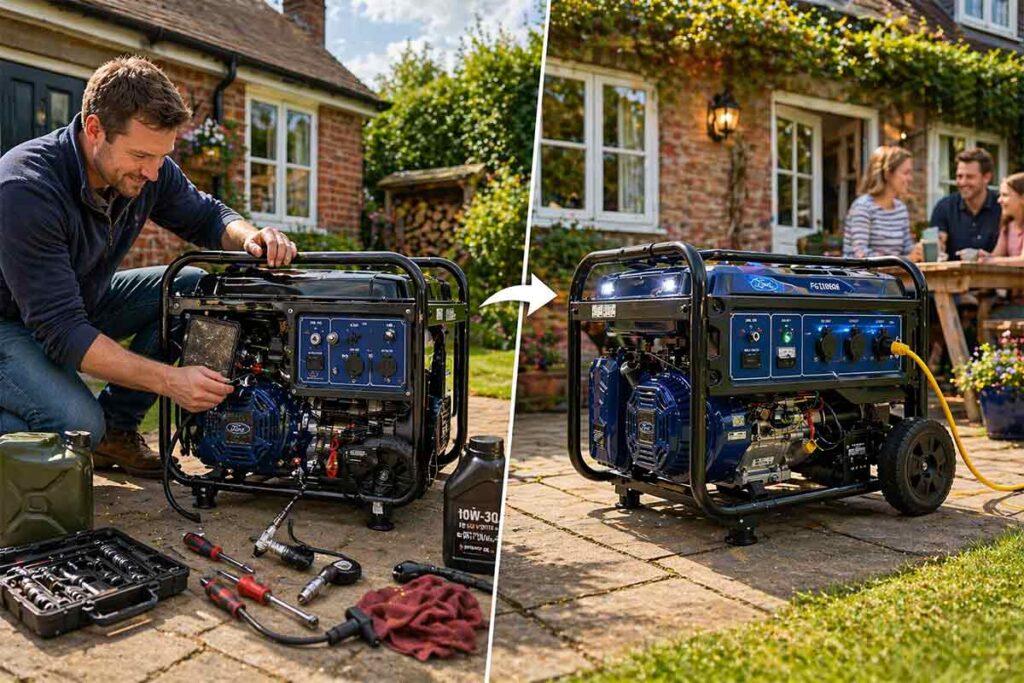
There’s nothing more frustrating than pulling the cord on your generator during a power outage and getting nothing but silence. If your generator won’t start right when you need it most, you’re not alone — it’s one of the most common complaints among generator owners, and in the vast majority of cases the cause is simple and fixable without calling a technician.
This guide walks you through the most common reasons a generator won’t start, in the order you should check them, along with safe step-by-step fixes for each one.
Why Your Generator Won’t Start: Common Causes
Before you start troubleshooting, it helps to know what usually goes wrong. Most no-start issues fall into one of five categories:
Stale or bad fuel. Gasoline breaks down over time, especially if it’s been sitting for more than 30 days without a stabilizer. Old fuel gums up the carburetor and prevents the engine from getting the air-fuel mixture it needs.
Dead or weak battery. On electric-start models, a battery that’s been sitting unused can lose charge or fail completely, leaving you unable to start the unit even though the engine itself is fine.
Fouled spark plug. A spark plug covered in carbon deposits or oil won’t generate a strong enough spark to ignite the fuel.
Clogged air filter. A dirty air filter restricts airflow to the engine, which can prevent combustion or cause the engine to stall right after starting.
Safety switches and low oil shutoff. Most modern generators have a low-oil sensor that blocks the engine from starting if oil is low, even by a small amount. This is a safety feature, not a malfunction.
Generator Won’t Start? Step-by-Step Fixes
Work through these steps in order — they’re arranged from the fastest checks to the ones that take a bit more time.
1. Check the oil level first. Set the generator on a flat surface and check the dipstick or oil sight glass. If oil is low, top it off with the manufacturer-recommended oil before doing anything else. Many units simply won’t start with insufficient oil, and this alone solves the problem more often than people expect.
2. Confirm the fuel is fresh. If the gasoline has been sitting in the tank for more than a month, drain it and replace it with fresh fuel. If you’re not sure how old it is, smell it — fuel that smells sour or varnish-like is past its useful life. This is one of the reasons why safe fuel storage matters so much for generator owners who don’t run their unit often.
3. Inspect and clean or replace the spark plug. Remove the spark plug and check its tip. A plug that’s black, oily, or crusted with deposits should be cleaned with a wire brush or replaced outright — spark plugs are inexpensive and easy to swap.
4. Check the air filter. Pull the air filter housing and look at the filter. If it’s visibly dirty or clogged, clean a foam filter with soapy water and let it dry completely, or replace a paper filter.
5. Verify the fuel valve and choke position. It sounds basic, but a fuel valve left in the “off” position or an incorrectly set choke is one of the most common reasons a generator won’t fire up. Make sure the fuel valve is open and follow the manufacturer’s starting sequence for choke position.
6. Test or charge the battery (electric-start models). If the engine cranks slowly or not at all when you turn the key, the battery is likely the issue. Charge it with a compatible charger, or try starting the unit with the manual recoil pull-start if your model has one, to rule out the battery as the sole cause.
7. Check the circuit breakers and safety switches. Some generators have an internal breaker that trips and prevents starting. Locate the reset button (check your owner’s manual) and reset it before trying again.
When to Call a Professional
If you’ve worked through every step above and the generator still won’t start, the issue may be more serious — a carburetor that needs a full cleaning or rebuild, an ignition coil problem, or a mechanical fault inside the engine. At that point, it’s worth taking the unit to an authorized service center rather than continuing to troubleshoot on your own, especially if the generator is still under warranty, since opening it up yourself could void coverage.
Preventing No-Start Problems in the Future
The best fix is avoiding the problem altogether. Running your generator for 15-20 minutes every month, using a fuel stabilizer for any gas you don’t plan to use within 30 days, and following a basic seasonal maintenance routine will prevent the vast majority of no-start issues. For a full walkthrough, see our generator maintenance checklist before every storm season.
One last safety note: if you’re troubleshooting a generator that won’t start because you’re trying to run it in a garage or other enclosed space, stop and move it outdoors first. Attempting to force-start a unit indoors — even briefly — creates a serious carbon monoxide risk. Review our guide on carbon monoxide safety rules every generator owner must follow before continuing.
Frequently Asked Questions
Why does my generator start and then immediately die?
This is almost always a fuel delivery problem — either a clogged carburetor jet or old fuel. Try draining and replacing the fuel first.
Can cold weather cause a generator not to start?
Yes. Cold engine oil is thicker and harder to turn over, and extreme cold can also affect battery performance on electric-start models. Using the correct oil weight for your climate helps.
Is it normal for a new generator to be hard to start?
Not usually. A brand-new unit that won’t start is more likely to have an issue with the fuel valve, choke setting, or a shipping-related problem like a disconnected spark plug wire — check those before assuming a mechanical fault.