
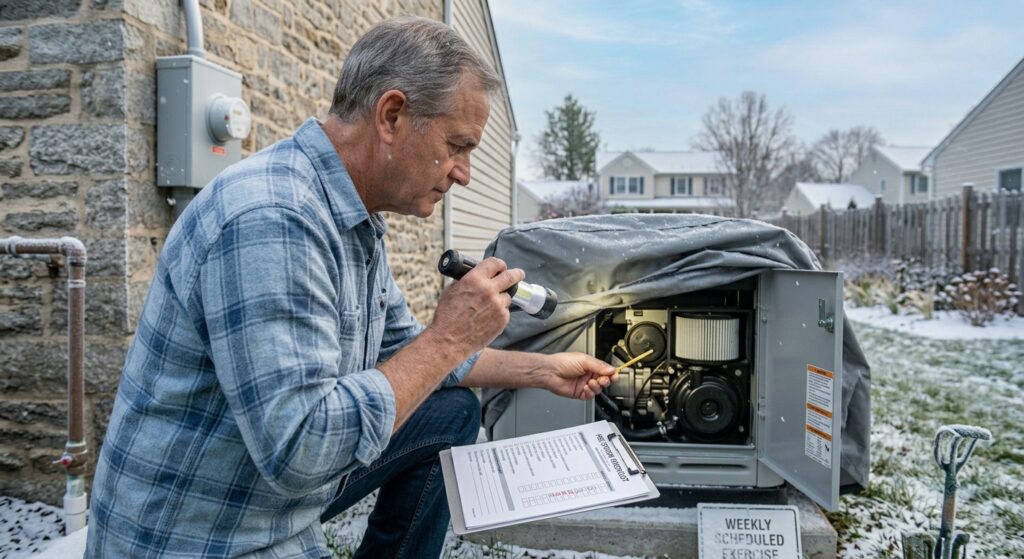
Cold weather is exactly when a generator is most likely to be needed, and also when it’s most likely to fail if it hasn’t been prepared properly. Knowing how to winterize a generator matters because low temperatures affect fuel, oil, batteries, and engine components in ways that summer storage simply doesn’t. A generator that ran perfectly in July can struggle to start in January without a few specific adjustments made beforehand. This guide walks through what actually changes in cold weather, and the steps that keep a generator reliable through winter.
Why Cold Weather Affects Generators Differently
Engines rely on a careful balance of fuel, oil, and battery power to start, and cold temperatures disrupt all three at once. Oil thickens as it gets colder, making it harder for an engine to turn over during startup. Batteries lose a significant portion of their effective capacity in freezing temperatures, sometimes as much as half their normal output. Gasoline itself can be affected too, since some fuel blends are more prone to condensation-related moisture buildup in cold, humid conditions.
None of these problems are hypothetical. They’re the specific, well-understood reasons cold-weather generator failures happen more often than warm-weather ones, and each has a fairly straightforward fix once you know to look for it.
Switch to Winter-Weight Oil
Most manufacturers recommend switching to a thinner, winter-weight oil once temperatures consistently drop below a certain threshold, often somewhere around 40°F, though this varies by model. Thinner oil flows more easily at low temperatures, which reduces strain on the engine during cold starts and helps it turn over more reliably.
Check your owner’s manual for the manufacturer’s specific cold-weather oil recommendation, since using the wrong viscosity can leave oil too thick to circulate properly right when the engine needs it most.
Protect the Battery From the Cold
Since batteries lose capacity in freezing temperatures, protecting yours becomes one of the most important winterizing steps. If possible, store a portable generator’s battery in a warmer location, like a garage or shed rather than fully exposed outdoors, and reconnect it before use. For standby generators with a permanently installed battery, a battery blanket or a low-wattage battery warmer can help maintain enough capacity for reliable cold starts.
It’s also worth testing battery charge more frequently in winter than in other seasons, since a battery that tested fine in October can lose meaningful capacity by January, especially after a stretch of unusually cold nights.
Use a Fuel Stabilizer and Consider Winter-Blend Fuel
Fuel stabilizer matters year-round, as covered in our guide on storing gasoline safely for generator use, but it becomes especially important heading into winter storage. A stabilizer helps prevent the moisture-related fuel breakdown that cold, humid conditions can accelerate, keeping fuel usable for longer between exercise runs.
In regions with especially cold winters, some generator owners also look for winter-blend gasoline, which is formulated to vaporize more easily at low temperatures and can meaningfully improve cold-start reliability.
Check Antifreeze and Coolant Levels on Liquid-Cooled Units
Standby generators with liquid cooling need one additional check that air-cooled portable units don’t: verifying the coolant mixture is rated for the lowest temperatures your area typically sees. A coolant mixture that’s too diluted can freeze solid in extreme cold, which can crack an engine block, a far more expensive problem than a simple hard-start issue.
Most manufacturers specify a coolant-to-water ratio rated for a specific minimum temperature, so it’s worth confirming your unit’s coolant matches your regional climate rather than assuming the factory fill is still adequate after a year or more in service.
Address Recoil Starter and Choke Issues on Portable Units
Portable generators that rely on a pull-cord recoil starter can become noticeably harder to start in cold weather, partly because thickened oil increases resistance and partly because rubber components in the starter mechanism stiffen in the cold. Pulling firmly and steadily, rather than with short, sharp tugs, reduces the risk of a cold, stiff cord snapping.
Many portable generators also have a choke setting specifically intended for cold starts, which enriches the fuel mixture to help the engine catch more easily. Checking that the choke moves freely, rather than being stuck from disuse, is worth doing as part of a broader pre-winter check.
Shelter the Generator From Snow and Ice
A generator left fully exposed to snow and ice accumulation faces risks beyond just a harder start. Snow can block air intake and cooling vents, and ice buildup on control panels or starter cords can make a unit difficult or impossible to start when you need it most.
A simple weatherproof cover, or placing the unit under a small overhang or lean-to, protects it from direct snow accumulation while still allowing the ventilation a running generator needs. It’s important that any shelter used still allows adequate airflow, since blocking ventilation entirely creates the kind of carbon monoxide risk covered in our carbon monoxide safety guide.
Exercise the Generator More Often in Winter
Cold weather makes regular exercising, covered in our guide on how often you should run your generator, even more valuable than usual. Running the engine periodically keeps the battery charged, circulates oil through cold components, and gives you an early warning if cold-weather problems are starting to develop, rather than discovering them for the first time during an actual snowstorm outage.
Check Cold-Weather Kits for Standby Units
Many standby generator manufacturers offer a cold-weather kit as an optional accessory, which typically includes a battery warmer, an oil heater, and sometimes an enclosure designed to retain more heat around the engine block. Homeowners in regions with consistently harsh winters often find this kit pays for itself the first time it prevents a failed start during a genuinely dangerous cold-weather outage.
Transitioning Back to Warm-Weather Settings
Winterizing isn’t a one-way process. Once the coldest months pass, it’s worth switching back to standard-weight oil if you changed to a winter-weight blend, and confirming the choke and starting settings are back to their normal warm-weather position. Leaving winter-specific adjustments in place through summer can occasionally cause the opposite problem, such as oil that’s too thin for hot-weather operation under a heavy load.
Final Thoughts
Winterizing a generator comes down to accounting for how cold weather affects oil viscosity, battery capacity, coolant integrity, and fuel stability, then addressing each one before temperatures drop rather than after a failed start reveals the problem. A few preventative steps, taken once at the start of the season and reversed once it ends, make the difference between a generator that starts reliably in freezing conditions and one that leaves a household without power during exactly the kind of storm it was bought to handle.